
If you have ever watched a gorgeous topcoat peel off in sheets, you already know the dirty secret of paint jobs: the finish is only as good as what is underneath it. I have primed everything from beat up baseboards to glossy cabinet doors, and the difference between a smooth, tough finish and a flaky mess usually comes down to picking the best paint primer for the surface you actually have, not the one you wish you had.
The tricky part is that primers can feel like they all do the same thing until they do not. Some bite into slick surfaces, some lock down stains and odors, and some make porous drywall stop drinking your paint like it is happy hour. I put the options in this roundup through the kinds of real world prep that make or break a project so you can choose with confidence and spend more time painting and less time sanding regrets.
Best Paint Primers in 2026
| Image | Model | |
|---|---|---|
 | Best Overall Bulls Eye 1-2-3Editor's Choice  Check Price | Check Price |
 | Best for Difficult Surfaces INSL-X Stix PrimerCheck Price | Check Price |
 | Best for Mold & Mildew Zinsser Mold PrimerCheck Price | Check Price |
 | Best Value Flat White PrimerCheck Price | Check Price |
 | Best Low-Odor KILZ Odorless PrimerCheck Price | Check Price |
1. Zinsser Bulls Eye 1-2-3 Primer Quart

When I need one primer that can bounce between indoor and outdoor jobs without a lot of drama, this Bulls Eye 1-2-3 quart is the kind of can I reach for. It’s water-based, bright white, and it lays down a flat finish that makes it easier to see where I’ve been and where I’ve missed – which is half the battle on trim, walls, and touchy spots.
What I notice most is how confidently it grabs onto surfaces that are usually a pain, including slick, glossy areas. I’ve used it specifically when I wanted better coverage and fewer finish coats, and it’s also a solid choice when stains or odors are part of the problem. It dries fast enough that I’m not babysitting it all day, and the low odor makes it a lot more pleasant to use in lived-in spaces.
I will say it can feel on the thicker side, so I don’t rush it – I load the brush or roller properly and keep my technique steady. The upside is that thickness helps with sealing and hiding. And if your project involves metal, it’s nice knowing it’s suited to priming ferrous metal and offers rust inhibition, which gives me a little extra peace of mind before topcoat.
Pros:
- Works on interior and exterior surfaces, so I can keep one reliable primer on hand
- Bonds well to glossy areas without needing to scuff first
- Good at blocking stains and sealing odors before the finish paint goes on
- Water-based with quick dry time and minimal smell
Cons:
- Thicker feel means it can take a bit more effort to spread evenly
2. INSL-X Stix Waterborne Bonding Primer, White Quart
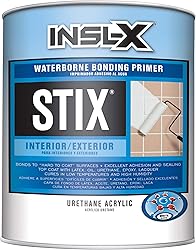
When I run into a surface that laughs at ordinary primer – glossy tile, slick plastics, shiny old paint, even metal – this is the kind of product I reach for. It’s a water-based bonding primer that’s built for those “nothing wants to stick here” jobs, and it gives me that reassuring grab before I ever crack open the finish coat.
In use, I like how it lays down and how quickly it gets out of my way. I can keep a project moving without the lingering solvent stink, and cleanup doesn’t turn into a separate chore. For a quart, the coverage is in the 75-100 sq ft range, so I treat it like a problem-solver for targeted areas, cabinets, trim, doors, tile sections, and other tricky spots rather than a bargain primer for whole-house walls.
The cured film ends up tough, and it plays nicely under a wide range of topcoats, which matters when I’m matching what’s already on a job. One practical note – on some surfaces I still plan on a second coat if I want a perfectly uniform base, and in cold-weather work it’s nice knowing it can cure down around 35 F when many primers would rather you didn’t even open the can.
Pros:
- Bonds well to slick, glossy, and otherwise stubborn surfaces
- Works indoors or out and accepts many different topcoat types
- Low odor and soap-and-water cleanup makes it easier to live with
- Can cure at relatively low temperatures for a waterborne primer
Cons:
- Quart size and pricing can make large areas expensive
- You may want an additional coat on certain surfaces for the most even base
3. Zinsser Mold Killing Primer, Water-Based Quart

When I’m staring at a wall that’s had a mold history, I don’t want a primer that just plays defense – I want one that actually tackles what’s already there. This Zinsser quart is built for exactly that job. It’s a water-based primer meant for problem areas like bathrooms, basements, window frames, and other spots where moisture likes to pick fights.
In use, it lays down like a purpose-made coating rather than a thin, fussy “specialty” product. It dries fast, covers well, and leaves a clean white base that’s easy to topcoat. I also like that it works under other coatings, so I can treat the issue first and then finish with the paint system I want.
That said, I treat this stuff like a partner, not a miracle. If moisture is still getting in, mold will always try to come back somewhere – so I fix the source first. And while it’s water-based, I’ve learned storage matters with products like this. If I’m not going to use the whole quart, I plan ahead so I’m not wrestling with leftovers later.
Pros:
- Designed to handle existing mold and mildew situations, not just “future prevention”
- Water-based and quick to dry, making turnaround faster
- Good coverage and a solid white base for topcoats
- Works across a wide range of interior and exterior areas where moisture is common
Cons:
- Odor can be noticeable during application
- Not ideal to stash half-used for long periods – plan to use it up or store carefully
4. Rust-Oleum Painter’s Touch Flat White Primer

When I need a brush-on primer that behaves itself indoors, this Rust-Oleum flat white has been an easy reach. It’s water-based, so it doesn’t stink up the room, and it’s ready to move along pretty quickly once it’s on the surface.
I’ve used it across a mix of surfaces where a dependable base coat matters – think wood and metal, plus some of those oddball spots like masonry and unglazed ceramic. The flat look does me a favor because it doesn’t call attention to little dings and sanding scratches the way shinier primers can.
Prep still counts. I get the best results when I sand first (around the 180-200 grit range), then clean with a degreaser and let everything dry before I start brushing. Once that’s handled, the primer lays down smooth and gives a solid foundation so the topcoat behaves and the finish looks more even.
Pros:
- Works on a wide range of indoor and outdoor surfaces
- Water-based formula keeps odor down and cleanup simple
- Dries to the touch fast, which helps keep projects moving
- Flat finish helps mask minor surface flaws under the paint
Cons:
- Surface prep is non-negotiable – skipping sanding and cleaning can bite you later
- Coverage is finite, so larger jobs may need more than one quart
5. KILZ Odorless White Aerosol Primer, 13 oz
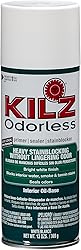
When I want primer performance without turning the room into a chemical science fair, I reach for this KILZ odorless aerosol. The low-odor angle is the real draw here – especially in tight spots like cabinets, baths, and basements where smells like to hang around and overstay their welcome.
In my use, it lays down with solid coverage for a spray can primer, and it’s a handy way to seal and reset a problem area without dragging out rollers and trays. For damp-prone areas and surfaces that have picked up unwanted smells, it’s been a dependable “reset button” before topcoat.
That said, the nozzle can be a little fussy. I’ve seen some buildup and mess around the tip during use, so I keep a rag nearby and stay mindful when removing the cap. Also, plan on building coverage in passes – depending on what you’re covering, it can take more than one coat to get the look you want.
Pros:
- Odorless formula makes it easier to use indoors
- Spray application is fast for small areas and touch-ups
- Delivers good coverage for an aerosol primer
Cons:
- Nozzle can leak or gum up, so handling can get messy
- May take multiple coats to fully cover tougher spots
Do You Actually Need Primer?
Not every paint job needs a separate primer, and I’m not going to tell you to buy something you don’t need. Here’s the honest breakdown. You can skip primer if you’re painting over a clean, sound surface in similar color with a quality self-priming paint — think repainting a bedroom wall from one neutral to another. But primer becomes non-negotiable when you’re dealing with bare drywall or wood, stains or water damage, glossy surfaces that won’t grip paint, major color changes (especially going light over dark), or any surface with mold or odor issues. When in doubt, prime. A $10-15 quart of primer is always cheaper than redoing a failed paint job.
Understanding Primer Types and Their Applications
Not all primers are created equal, and trust me, I’ve learned this the hard way after watching expensive paint jobs fail because someone grabbed the wrong primer off the shelf. The surface you’re painting dictates which primer you need — metal needs rust-inhibiting properties, while bare wood requires deep penetration to seal the pores. I once saw a guy use water-based primer on raw steel, and within six months, rust was bleeding through his topcoat like a bad tattoo.
Oil-based primers were long considered the gold standard for stain blocking and adhesion, but modern water-based bonding primers like INSL-X Stix have largely closed that gap — with easier cleanup, lower odor, and better VOC compliance. They take longer to dry and smell like a chemical factory, but they get the job done when you need serious blocking power. Water-based primers have come a long way though — they’re easier to clean up, dry faster, and meet strict EPA VOC regulations that oil-based primers often struggle with.
Specialty Primers for Problem Surfaces
Some surfaces are just plain stubborn, and that’s where specialty primers shine. Bonding primers work miracles on glossy surfaces that would normally reject paint — think laminate cabinets or that weird textured wallpaper from the 80s. That’s exactly why I included the INSL-X Stix in the #2 spot above; it’s built for surfaces that laugh at regular primer. I keep a can of high-adhesion primer in my shop specifically for those “this will never stick” moments, and it’s saved my bacon more times than I can count.
Rust-inhibiting primers are non-negotiable when dealing with ferrous metals — bare steel, iron railings, or any surface that’ll be exposed to moisture. If you’re not tackling a full rust job, it’s worth noting that the Zinsser Bulls Eye 1-2-3 in my Best Overall pick includes built-in rust inhibition, so one can covers a lot of ground.
Key Performance Factors to Consider
Coverage and Build Quality
Coverage specs on the can are like fuel economy ratings on cars — your mileage will vary. Most primers claim 350-400 square feet per gallon, but on porous surfaces or when you’re trying to block heavy stains, you might get half that. And if you’re working in a room with moisture or mold history, something like the Zinsser Mold Killing Primer from my #3 pick is worth the targeted investment before you even think about coverage math.
The build quality of primer matters more than most people realize. Cheap primers often have poor opacity and terrible flow characteristics, leaving you with streaks and thin spots that show through the topcoat. Quality primers self-level better and provide consistent film thickness, which means your final paint job will look professional instead of like it was done by someone wearing oven mitts.
Dry Time and Recoat Windows
Dry times aren’t just suggestions — they’re critical for adhesion and durability. Fast-drying primers might seem convenient, but they can trap solvents if you rush the topcoat application. I learned this lesson on a kitchen cabinet job where impatience cost me two days of sanding and respraying because the paint never properly cured over insufficiently dried primer.
Pay attention to recoat windows too. Some primers have a limited window where they’ll accept topcoats without additional preparation. Miss that window, and you’ll need to sand or apply another primer coat. Professional-grade primers typically offer more forgiving recoat times, which is why they cost more but save time in the long run.
Application Methods and Equipment Compatibility
Your application method should influence primer selection more than it typically does. Brush-and-roll primers are formulated differently than spray primers — they have different viscosities and flow characteristics. I’ve seen people thin brush primer for spraying and wonder why it runs like water, or try to brush spray primer and fight orange peel texture all day.
If you’re spraying, check the technical data sheets for recommended tip sizes and thinning ratios. Most quality primers will specify equipment requirements, and following these specs saves massive headaches. And don’t skip the safety basics — wear a respirator rated for organic vapors, protect your eyes, and make sure the room has real airflow, not just a cracked window. Solvent-based primers in a closed space will remind you fast why ventilation matters.
Quality Indicators and Red Flags
What to Look For
Quality primers typically cost more upfront but deliver better value through superior coverage and performance. Look for products that specify adhesion test results, hide-and-coverage ratings, and clear compatibility charts with various substrates.
Check for third-party certifications or compliance with recognized industry standards. Primers that list specific adhesion test results, VOC compliance data, and independent lab testing tend to come from manufacturers who invest in better formulations — not just better marketing.
Warning Signs to Avoid
Avoid primers with vague or missing technical data — if a manufacturer won’t tell you the solids content, dry time, or temperature ranges, they’re probably hiding something. Primers that claim to work on “any surface” are usually mediocre at everything. Be especially wary of bold health claims from lesser-known brands — generic “zero odor” primers that still smell, or “mold-proof” claims on products without EPA-registered antimicrobial ingredients. Established brands like KILZ have earned their low-odor reputation through consistent real-world performance, but a no-name primer slapping “odorless” on the label is a different story.
Trust me, if a primer costs significantly less than comparable products, there’s usually a reason. I’ve used bargain primers that seemed fine until the paint started peeling six months later. Primer failure isn’t immediately obvious but becomes expensive when you have to strip and restart entire projects.