

I have sanded enough drywall to know the difference between a clean finish and a dusty regret, and it usually comes down to the tool in your hands. If you are hunting for the best drywall sander, you are probably tired of swirl marks, aching shoulders, and that fine powder that somehow ends up in your coffee. I get it, and I have put a pile of sanders through real jobs so I could separate the helpful from the hype.
What surprised me most was how much the little things matter once you are up on a ladder chasing seams for the third hour straight. Some sanders feel steady and predictable, and others fight you like a shopping cart with a bad wheel. In the reviews below, I will walk you through what stood out in my hands, what I would actually keep on the truck, and what I would leave on the shelf.
A quick heads-up on sequence, since it saves people money: sanding is the last step before priming, so if the wall still has old paint failing on it, that comes off first — my paint stripper guide covers that part.
Best Drywall Sanders in 2026
| Image | Model | |
|---|---|---|
 | Best Overall WEN DW5084 Dual-HeadEditor's Choice  Check Price | Check Price |
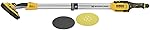 | Best Cordless DEWALT DCE800BCheck Price | Check Price |
 | Best Premium Bosch GTR55-85Check Price | Check Price |
 | Best Handheld WEN DW1085Check Price | Check Price |
 | Best Manual Hyde 09165 SanderCheck Price | Check Price |
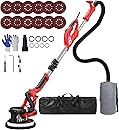 | Best Mid-Range Drywall Sander IMQUALI 8-AmpCheck Price | Check Price |
Power Source: Corded vs. Cordless Reality Check
Look, I’ve tried both setups extensively, and here’s the deal – corded sanders give you consistent power without the battery anxiety, but you’ll be wrestling with extension cords like you’re trying to untangle Christmas lights in July. I spent one memorable afternoon doing a basement ceiling where I had to move my extension cord setup six times because I kept running out of reach. Trust me, it gets old fast.
Cordless units are game-changers for mobility, especially when you’re working on stairs or odd angles where cords become death traps. But here’s what the marketing doesn’t tell you – most cordless sanders will start losing suction power as the battery drains, and you’ll find yourself swapping batteries more often than you’d like. I learned this the hard way during a kitchen renovation when my “all-day battery” lasted exactly 45 minutes of actual sanding. Worth checking your battery platform before you commit to cordless — the sanders above run on the same packs as the drills in my DeWalt drill roundup, and buying into a system you already own cuts the price by half.
Dust Collection: The Make-or-Break Feature
Don’t even think about buying a drywall sander without decent dust collection – I’m talking from experience here. A good dust collection system can capture 85-90% of the particles, while a cheap one might grab maybe half if you’re lucky. The difference between breathing clean air and feeling like you’ve been mining coal for eight hours is real.
Here’s what actually matters: look for sanders with multiple dust ports, sealed connections, and bags that don’t explode when you look at them wrong. I’ve had bags split mid-job, covering everything in a fine layer of drywall dust that took hours to clean up. The cleanup time alone will make you wish you’d spent the extra money on a quality dust system.
Pad Size and Flexibility Considerations
Bigger isn’t always better when it comes to sanding pads, despite what your ego might tell you. A 9-inch pad covers more ground but becomes unwieldy around outlets, corners, and detailed work. I’ve found that 6-7 inch pads hit the sweet spot for most residential work – you get decent coverage without constantly bumping into obstacles.
Pay attention to pad flexibility too. Rigid pads will leave marks on anything that isn’t perfectly flat, while overly flexible ones won’t apply consistent pressure. The best sanders have adjustable pressure settings, but even then, you’ll need to develop a feel for how much pressure actually works on different wall conditions.
Weight and Ergonomics: Your Back Will Thank You
After spending entire weekends sanding walls, I can tell you that a few pounds difference feels like the difference between carrying a laptop and carrying a bowling ball by the end of the day. Look for sanders under 8 pounds if you plan on doing any serious work – anything heavier and you’ll be taking breaks every 20 minutes whether you want to or not.
The handle design matters more than you’d think. Some manufacturers put the handle in weird positions that force you into awkward wrist angles, leading to fatigue and potential injury. I prefer sanders with adjustable or telescoping handles that let you find your natural working position, especially when dealing with different ceiling heights.
1. WEN DW5084 Dual-Head Variable-Speed Drywall Sander
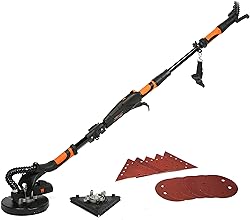
I like tools that don”t make me choose between “good on flats” and “good in corners,” and this WEN earns its keep by coming with two sanding heads: a round one for open field work and a triangle for the fussy spots where walls meet, patch edges live, and hand sanding usually steals your weekend.
In use, the variable speed is the difference between controlled smoothing and accidental overzealousness. I can start slow to feel out a repair, then bump it up when I”m chasing consistency across a bigger section. The head-mounted motor has plenty of bite, but it also puts weight out front—fine on walls, more of a shoulder tax when I”m overhead. I plan breaks accordingly; my joints appreciate a little schedule.
Dust control is clearly a priority here. The included long hose helps keep the vacuum where it belongs while I move around, and the hole pattern on the paper lines up well with collection on the round head. It”s not “zero dust forever,” but it”s a major step up from doing it the old-fashioned way. I also appreciate that it folds down for storage, because a big, awkward tool that can”t tuck away tends to “mysteriously” end up living in the way.
Pros:
- Dual-head setup (round + triangular) covers wide areas and corners without switching tools
- Variable-speed control makes it easier to match the tool to the surface and the task
- Dust hose length and paper hole layout help keep cleanup manageable
- Folds for easier transport and storage, and includes a useful spread of grits to get started
Cons:
- Front-heavy feel from the head-mounted motor can get tiring during ceiling work
- Round head needs specific compatible replacement papers, so restocking takes a little attention
2. DEWALT DCE800B Cordless 20V Drywall Sander
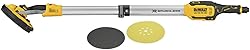
I’ve sanded more joint compound than I care to admit, and I’ll take cordless convenience any day I can get it. This DEWALT sander earns its keep by letting me work without dragging a power cord around ladders, drop cloths, and fresh corners I’m trying not to wreck. The brushless setup feels steady when I’m feathering repairs, and the telescoping shaft is a real back-saver when the ceiling is the job.
Dust control is where this tool separates itself from old-school misery. Hooked to an extractor through the AirLock connection, it keeps the mess far more contained than hand sanding ever will. I also like having a variable-speed dial because not every patch needs the same aggression; dialing it back helps me stay in control and avoid getting ahead of myself.
That said, it’s not a dainty tool. If I’m doing a big ceiling stretch, I can feel the weight by the end of the run. And while the wireless on/off control with compatible extractors is a slick idea, it only pays off if my dust setup is built to match. Still, for speed, cleanup, and reach, this one’s a serious upgrade from the usual grind.
Pros:
- Cordless design cuts the hassle of working overhead and moving room to room
- Telescoping shaft helps reach ceilings, tight spots, and awkward areas
- Variable speed makes it easier to match the tool to the finish work
- Dust-extractor connection options support cleaner sanding when paired correctly
Cons:
- Heavier feel can wear me out during long sessions
- Wireless extractor control depends on having a compatible dust extractor
3. Bosch GTR55-85 Drywall Sander With Suction Modes

I like tools that feel like they were designed by someone who’s actually had to sand a ceiling for hours. This Bosch kit is built around that idea: the head stays compliant against the surface, and the controls are right where my hand already lives. Once I got my vacuum and speed settings dialed in, it settled into a predictable rhythm that made big areas go faster and feel less like punishment.
The standout for me is the ceiling-assist suction mode. Overhead work is where most drywall sanders turn into an unplanned shoulder workout, and this feature genuinely helps by taking some of that “hanging on the wall” effort off my arms. The T-style handle also gives me better options for how I hold it, and the quick-release pole is handy when I want reach on a ceiling, then want to drop the extra length to keep things lighter on walls.
That said, it’s not magic. It’s still a substantial tool, and holding it overhead for long stretches can wear you down. And like most big-disc sanders, tight corners and edges are where I end up doing some touch-up work by hand anyway. I also wish it had a built-in light at the head, because good raking light is half the battle when you’re chasing ridges and swirls.
Pros:
- Ceiling-suction mode reduces the “overhead drag” and helps fight fatigue
- Flexible head tracks surfaces smoothly and helps avoid accidental surface damage
- Quick-release extension makes it easier to switch between ceilings and walls without carrying extra bulk
- On-tool controls are positioned so I can adjust speed and airflow without breaking grip
Cons:
- Still feels heavy during extended ceiling work
- No integrated head light, and corners/edges still need extra attention
4. WEN DW1085 Variable-Speed Drywall Sander Kit

I like tools that earn their keep, and this WEN checks that box. The motor has enough muscle to actually move material, and the speed range lets me creep in gently or pick up the pace once I’ve got the feel of the surface. For drywall work, that control matters—especially when I’m trying to level compound without getting greedy and digging a low spot.
Dust control is where this unit makes my day better. With the hose hooked up to a vacuum, it keeps the mess under control way better than hand sanding ever will. I still plan on a quick wipe-down before paint (that’s just being a grown-up), but it’s the difference between “normal cleanup” and “why is there powder in the next room?”
In the hands, it’s a solid performer but not a feather. The shoulder strap and the side handle help when I’m going after walls for a while, and I appreciate that the handle can swap sides depending on how I’m working. On ceilings, the weight reminds me to pace myself—work a bit, take a break, repeat. The hook-and-loop pad is also a small joy: changing discs is quick, which keeps the job moving instead of turning into a fiddly timeout.
Pros:
- Variable speed makes it easier to match the tool to the task
- Dust hose and bag setup helps keep sanding mess manageable
- Hook-and-loop pad makes disc swaps fast
- Includes assorted sanding discs and useful extras like strap and adapters
Cons:
- Can feel heavy during extended overhead sanding
- Replacement paper compatibility is limited to specific WEN DW-series discs
5. Hyde 09165 Vacuum Hand Drywall Sander

I reach for this Hyde vacuum hand sander when I want to keep a room livable while I’m finishing mud. Hook it to a wet/dry vac, and it does what a “dust-free” tool is supposed to do: keep that fine powder from drifting onto everything I own (including my lungs). It’s a simple setup, and the included hose and adapters mean I’m not playing guessing games with shop-vac sizes.
In use, the suction makes a real difference. The sanding screen stays clearer than it would on a plain block, and the tool can pull itself against the surface when suction is cranked up. That’s handy for control, but it also means I have to stay mindful of pressure so I don’t work harder than I need to. For big flats on walls and ceilings, it’s a tidy, practical way to sand without turning the job into a cleanup project.
The tradeoff is that it’s still hand sanding, and you feel it—especially overhead with a hose hanging off the tool. There’s also a bit of a technique to managing the hose so it doesn’t twist and tug while I’m trying to keep my passes even. Corners are doable, but I’m faster finishing those up with a different hand tool after I get as close as I can with this sander.
Pros:
- Keeps drywall dust in check when paired with a wet/dry vacuum
- Adapters cover common vac hose sizes, so hookups are straightforward
- Screen changes are quick, and the included screen gets me started immediately
Cons:
- More effort than powered sanding, especially on ceilings with the hose weight
- Not my favorite for tight corners compared with a smaller hand option
6. IMQUALI 8-Amp Drywall Sander With LED
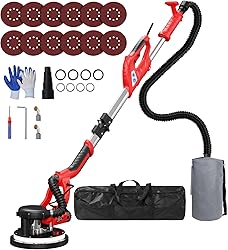
I like tools that earn their keep, and this IMQUALI drywall sander does exactly that for ceilings and big wall runs. The 8-amp motor has the kind of muscle that keeps the pad moving without feeling wild, and the variable speed range lets me slow it down for control or bump it up when I want to cover ground.
The dust setup is the real make-or-break on any drywall sander, and this one is at its best when I keep the head flat to the surface and let the vacuum system do its job. When everything is aligned, it keeps the mess noticeably lower, which means less time sweeping and less grit floating around where I do not want it. If the hose/bag setup gets kinked or twisted, it can lose the advantage and start tossing dust, so a little attention to routing pays off.
For ceiling work, the extendable handle helps me stay on the floor instead of balancing on a ladder all day, and the LED ring is more useful than it sounds on paper. It throws light across the surface so I can spot ridges and low spots as I go. I also appreciate the detachable edge for getting tighter to corners, and the included sanding discs and extras make it feel like a complete kit right out of the bag.
Pros:
- Strong 8-amp power with a useful variable-speed range for different sanding tasks
- Built-in dust collection can keep the work area much cleaner when the head stays parallel
- Extendable handle and relatively light overall setup make ceilings less punishing
- LED lighting improves visibility for catching imperfections before paint
Cons:
- Dust control can drop off if the bag/hose twists or the setup is not kept aligned
- Carry bag durability can be a weak spot
Essential Features to Prioritize
Variable speed control isn’t just a luxury feature – different compounds and textures require different speeds, and having that control prevents you from either barely scratching the surface or gouging holes in your drywall. I typically start slow on delicate areas and ramp up speed for heavy material removal. One thing no sander compensates for is a damp wall: compound over trapped moisture will crack no matter how well you feather it, so I check with one of the moisture meters I tested before the first pass.
- LED work lights that actually illuminate your work area, not just create pretty shadows
- Quick-change sanding disc systems that don’t require tools
- Swivel joints that let the pad follow wall contours naturally
- Vacuum hose connections that won’t pop off under normal use
Budget Reality: What You Actually Get
I’ve tested sanders across the price spectrum, and there’s definitely a point of diminishing returns. The cheapest units will work for small touch-up jobs, but they’ll frustrate you on anything bigger than a single room. Mid-range options usually offer the best balance of features and durability for most DIY and light professional work.
The most expensive sanders often include features you’ll never use, like smartphone connectivity or advanced dust monitoring systems. Focus your budget on the core functions – reliable dust collection, consistent power delivery, and comfortable operation. Everything else is just marketing fluff that sounds impressive but doesn’t make your walls any smoother. Whatever you spend, budget for the primer too — sanded drywall drinks paint unevenly, and skipping the step in my paint primer guide will cost you an extra topcoat.