

You crack open a tube of silicone, squeeze the trigger on a bargain caulking gun, and watch a blob of goop ooze out three seconds after you stopped. Been there. Then you drag a finger through the mess and pretend that was the plan.
The best caulking gun is the one that gives you control, plain and simple. Some feel smooth and stop clean. Some fight you the whole way, then punish you with a fat bead right at the end.
I sorted through the usual suspects, from basic manual guns to powered options, looking for the ones that make caulk land where it should. There are a few surprises in the mix, and one old school feature I still refuse to give up.
Best Caulking Guns in 2026
| Image | Model | |
|---|---|---|
 | Best Overall Newborn 930-GTD Drip-Free Caulking GunEditor's Choice  Check Price | Check Price |
 | Best Budget Bates Choice Caulking GunCheck Price | Check Price |
 | Best for Mixed Materials WORKPRO Adjustable Caulking GunCheck Price | Check Price |
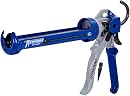 | Best for Thick Adhesives Newborn 250 Revolving Frame Caulking GunCheck Price | Check Price |
 | Best for High Volume Runs DEWALT DCE560B 20V MAX Caulking GunCheck Price | Check Price |
 | Best Cordless Value CRAFTSMAN CMCE600B V20 Caulk GunCheck Price | Check Price |
1. Newborn 930-GTD Drip-Free Caulking Gun

The Newborn 930 GTD is the manual caulking gun I would hand to most homeowners first. It is inexpensive, simple, and surprisingly clean around trim, tubs, windows, and painted casing where one extra blob can turn a neat bead into a finger painting project.
The main reason is the way the hex rod releases pressure when I let go of the trigger. On finish work, that matters more than raw power. I can run a bead along a baseboard, stop at a corner, and not have caulk oozing out while I reposition. Plenty of manual guns claim to control mess, but this one has the kind of shutoff feel I expect from tools costing far more. For bathroom silicone or standard acrylic around windows, the 10:1 thrust ratio gives enough push without making my hand feel like I have been squeezing a stress ball for an hour.
I also like the little built in helpers. The tip cutter saves me from hunting for a knife. The puncture tool gets through the inner seal. The scraper and shaping square are the kind of extras I normally forget until I am already kneeling next to the tub with sticky fingers. None of that makes the gun fancy, but it makes a weekend job smoother.
Compared with the Bates Choice gun, this Newborn feels more complete. Both sit in the budget lane and both are aimed at ordinary tubes, but the Newborn has better control at the end of a bead and more useful onboard tools. If I am caulking stained trim, white crown, or the line between a vanity and wall, I want that extra control.
It is not the right choice for every tube. Thin latex can still creep a bit after release, and the 10:1 setup is not meant for heavy adhesives or stubborn materials. I would also not pick it as my only gun for daily trade use if the rivets are going to see constant abuse. For most DIY caulking, though, this is the sweet spot. If you prefer something even more pared back and light, the Bates Choice keeps the same basic budget feel with fewer extras.
Pros:
- Excellent bead shutoff
- Comfortable trigger grip
- Useful built in tools
- Strong budget value
Cons:
- Limited thick material power
2. Bates Choice Caulking Gun

I like this Bates Choice gun for the same reason I keep a plain screwdriver in the kitchen drawer. It does the job, nobody needs a manual, and I am not worried about lending it to a neighbor.
For bathroom silicone, kitchen backsplash touch ups, and small gap sealing around trim, the 10 to 1 push feels right. It gives enough control to lay a steady bead without making my hand feel like I have been cracking walnuts. The pull back loading is simple, which matters more than folks think when a tube is already open and threatening to ooze onto the counter.
Compared with the Newborn 930 GTD, this Bates Choice is the simpler pick. The Newborn brings more built in utility and a hex rod design, while this one feels lighter and more grab and go. For a first caulking gun, that is not a bad trade.
I would not make it my first choice for thick construction adhesive or long professional days. The trigger can feel less friendly with heavier material. For occasional home sealing, though, it is a budget friendly backup that behaves itself and keeps mess under control. Once the job moves into denser adhesive, I start wanting adjustable push power.
Pros:
- Simple cartridge loading
- Good bead control
- Helps limit drips
3. WORKPRO Adjustable Caulking Gun

The WORKPRO is the one I would hand to a DIYer who has one Saturday project in the kitchen, another in the garage, and no patience for owning three different caulking guns. Its trick is simple but useful: it lets me choose 9:1 for easier flowing acrylics or 18:1 for stiffer adhesives. That matters more than it sounds. Thin sealant can get messy fast if the gun shoves too hard, while thick material can make a cheap trigger feel like a hand workout.
I like the control here for mixed weekend work. Around a tub, I stay in the lower setting and use the red pressure control to keep the bead from drooling between stops. When switching to construction adhesive or a heavier sealant, the higher ratio gives the trigger more muscle. The smooth rod also helps it feel less clacky than old ratchet guns, which is a small thing until you are crawling along 20 feet of trim.
The rotating barrel is another feature I appreciate on real jobs. Corners, backsplash edges, window trim, the back side of a vanity, those are the places where a fixed frame makes you twist your wrist like you are trying to win a bar bet. Being able to turn the tube instead makes the bead easier to aim.
Compared with the Newborn 250, both can push thick material at 18:1. The WORKPRO adds the lower ratio and rotating barrel while staying in the budget friendly lane. The tradeoff is feel. The Newborn 250 has the more serious heavy duty character, while this one leans toward versatility and value.
It is not perfect. There is no built in cutter for the nozzle, so keep a utility knife nearby. I would also spend two minutes learning the ratio switch and red button before opening a tube, unless you enjoy practicing on cardboard like the rest of us have done once or twice. If your jobs bounce between sealants and adhesives, this is the flexible manual pick. If all you run is thick adhesive and you want maximum toughness, the Newborn 250 is the more focused tool.
Pros:
- Switchable 9:1 and 18:1
- Useful drip control button
- Rotating barrel for corners
- Smooth quieter rod action
Cons:
- No nozzle cutter included
- Controls take learning
4. Newborn 250 Revolving Frame Caulking Gun
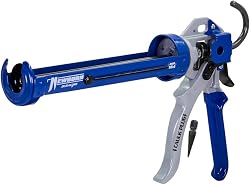
This is the caulking gun I grab when the tube is going to fight back. The Newborn 250 is not the tidy little helper I would hand to a first timer for bathroom latex. It is a stronger, more direct tool, and I think it makes the most sense with stiff construction adhesive, heavy sealant, or long runs where a weaker gun turns your forearm into hamburger.
The big deal is the eighteen to one leverage. Compared with a basic ten to one or twelve to one gun, it takes far less grip pressure to move thick material. I can keep a steadier bead because I am not crushing the trigger. The rotating cartridge holder also helps around trim, corners, and odd angles, since I can turn the tube instead of twisting my wrist into a plumbing diagram.
But this is not a drip free design. That matters. The WORKPRO adjustable gun gives you eighteen to one power with anti drip control, and the Newborn 930 GTD is friendlier if clean stops are your priority. This Newborn 250 keeps pressure in the tube until I release it myself, so I treat it like a pro gun. Finish the bead, hit the release, wipe the tip, move on. Skip that rhythm and it will leave a little gift on the floor.
A few details bug me. The side poker can land where my hand wants to be, and the cutter is not my favorite way to open a nozzle. The rotating barrel can also feel a bit too eager on straight runs. Still, for experienced hands, the power and metal build make it worth the mid range cost. If hand fatigue is the bigger battle, or the job has a pile of tubes waiting, I would start thinking about a powered gun next.
Pros:
- Eighteen to one leverage
- Handles stiff materials well
- Rotating cartridge holder
Cons:
- Not drip free
- Side poker can annoy
5. DEWALT DCE560B 20V MAX Caulking Gun

I would not buy the DEWALT DCE560B for one bathroom sink bead and a little trim touch up. That is like firing up a table saw to cut a popsicle stick. But for long runs around windows, shower surrounds, roof flashing, or any job where your hand starts complaining before the second tube is empty, this cordless gun makes a strong case for itself.
The big win is simple: the motor does the squeezing. With a manual gun, even a decent one, your bead changes as your grip gets tired. Here, the trigger and speed dial let you slow the flow for corners, then open it up for straight runs without pumping your hand into a cramp. I like that for sealant work because consistency matters more than speed. A wavy bead wastes caulk and gives you more cleanup with a wet finger or tooling spatula.
The drip control is useful, since the rod pulls back after you let off the trigger, but I would still keep a rag nearby. On short stop and start work, it may not be perfect. That is not unusual with powered caulk guns, especially if the material is thin or the tube has pressure built up. My tip is to practice on cardboard first, then sneak up on the speed setting before touching finished tile or painted trim.
This is also where the DEWALT premium angle shows up. The LED helps in cabinets and dim corners, the hook is handy on a ladder, and if you already run DEWALT 20V MAX tools, sliding in a battery you already own keeps the whole setup sensible. If you do not, the bare tool situation changes the math fast.
Compared with the CRAFTSMAN CMCE600B, DEWALT feels like the more polished pick, mainly because of its refined control and jobsite details. The CRAFTSMAN still brings cordless dispensing, variable control, and rod retraction at a friendlier buy in, so I would look hard at it if I were not already invested in DEWALT batteries.
For high volume caulking or limited grip strength, I think this is worth considering. For occasional weekend work, it is probably more tool than you need.
Pros:
- Excellent bead control
- No hand fatigue
- Works with 20V MAX
Cons:
- Battery sold separately
- Expensive for small jobs
6. CRAFTSMAN CMCE600B V20 Caulk Gun

If I already had CRAFTSMAN V20 batteries on the shelf, this would be the cordless caulking gun I would seriously consider before spending more on the DEWALT DCE560B. It gives me the same basic relief from hand squeezing, the same kind of bead control, and the same cleaner stop after releasing the trigger, but it keeps the buy in more reasonable if I am staying inside the V20 setup.
The control setup is the main reason it works for caulking instead of just blasting sealant everywhere. I like having both a speed setting and trigger control, because bathroom corners, window trim, and long siding seams all want different pacing. With 550 pounds of push behind it, thicker sealants and adhesives are fair game, so this is not just a lazy man’s latex caulk gun.
It is not as polished as the DEWALT. The body is bulky, so I would not grab it first for a cramped vanity cabinet or a tight inside corner. There can also be a slight pause between pulling the trigger and seeing material move, so I would always start on scrap cardboard before touching the joint. That little warm up run saves ugly blobs.
The rotating tube holder helps when the angle gets weird, and the hook is handy when I am moving around a job instead of setting the tool in wet grass like a fool. My verdict is simple: for CRAFTSMAN V20 owners, this delivers most of the cordless comfort for less money. Pick the battery platform you already own, practice the trigger, and your caulk lines will thank you.
Pros:
- Strong 550 pound push
- Good bead speed control
Cons:
- Bulky in tight spots
How to Pick the Right Caulking Gun for Your Project
Thrust Ratio
Thrust ratio tells you how much force the gun applies to the plunger for each squeeze of the trigger. A 10:1 gun gives ten pounds of push for every pound your hand puts in. An 18:1 gun gives eighteen. That means less hand strain and better control when the tube fights back.
For thin acrylic latex caulk around baseboards, trim, and small gaps, a 10:1 gun like the Bates Choice is usually plenty. For thick polyurethane sealant, roofing sealant, subfloor adhesive, or cold tubes from the garage, I want 18:1. The Newborn 250 sits in that stronger category, and the WORKPRO adjustable gun lets you switch between easy flow and muscle mode. The polyurethanes I use in driveway work sit right at the top of that range — the products themselves are in my concrete crack filler roundup.
Buy the thrust ratio for the thickest material you plan to use, not the easiest tube on the shelf. A low ratio gun can still squeeze stiff adhesive, but your forearm will know about it after half a tube.
Anti Drip Mechanism
Drip free is not a luxury if you care about clean lines. Once you stop squeezing, pressure remains inside the tube. A basic ratchet gun keeps pushing for a second or two, which leaves blobs at the end of the bead and wastes material on your drop cloth, shoe, or dog. Ask me how I learned that one.
Manual guns solve this a few ways. A smooth hex rod releases pressure faster than an old ratchet rod because it slides cleanly instead of stepping tooth by tooth. The Newborn 930 GTD uses a Gator Trigger style release with a smooth hex rod, which is the kind of setup I like for trim and bathroom work. Some guns use a button or toggle that backs pressure off when you let go of the trigger. Cordless guns, like the DEWALT DCE560B and CRAFTSMAN CMCE600B, use motorized retraction to pull the plunger back automatically.
If clean trim work matters, choose a gun that releases pressure without you thinking about it. You can always hit the release manually, but on a long run under crown molding, muscle memory gets lazy fast.
Manual vs Cordless
A manual caulking gun makes sense for most weekend jobs. One bathroom, a few windows, a backsplash, or a tube of construction adhesive for a repair does not need a battery and motor. A good manual gun is lighter, easier to toss in a drawer, and gives you excellent feel at the trigger.
Cordless earns its keep when volume goes up. If you are sealing a full exterior, running adhesive across sheets of subfloor, or your grip strength is limited, a powered gun keeps the bead steady while your hand stays relaxed. Variable speed control also helps on long seams because the flow stays consistent instead of changing as your hand gets tired.
Do not buy cordless unless you either already own the battery system or have enough tubes to justify the weight. The DEWALT DCE560B makes the most sense if you already run DEWALT 20V MAX. The CRAFTSMAN CMCE600B fits better if you already use V20 tools. Batteries, chargers, and storage all matter once the job is done.
Ergonomics and Hand Fatigue
Hand fatigue sneaks up on you. The first tube feels fine. By the third, a skinny trigger and stiff rod can make a simple bead look like it was applied during an earthquake. I pay attention to grip shape, trigger length, and how smoothly the plunger rod moves before I worry about flashy extras.
Cushion grips help, but smooth action matters more. A gun that binds halfway through the stroke forces you to squeeze harder, then the caulk jumps out too fast. Weight also matters. An all steel frame feels solid, and I like that for tough adhesives, but a lighter frame is easier overhead or along a ceiling line.
- For one tube jobs, comfort is nice.
- For three to six tubes, comfort changes the quality of the bead.
- For overhead work, lighter weight beats brute strength unless the material is thick.
Built In Tools and Extras
A spout cutter is useful because it gives you a clean angled tip without hunting for a utility knife. A seal puncture rod is even better. Most tubes have an inner foil seal, and if you forget to pierce it, you will either think the tube is bad or squeeze hard enough to make a mess at the back end.
A rotating barrel is one of the few extras I actively look for. It lets you keep the same wrist angle while turning the nozzle around corners, inside cabinets, and along vertical seams. The Newborn 250 and WORKPRO adjustable gun both use this style of feature well. Ladder hooks are handy if you work off steps or staging, but they should not be the reason you buy the gun.
- Worth having: spout cutter, puncture rod, rotating barrel.
- Nice if included: ladder hook, extra nozzle storage.
- Easy to ignore: decorative handles, oversized claims with no mechanical benefit.
Material Compatibility
Not every tube squeezes the same. Painter’s latex caulk flows easily and works with most 10:1 manual guns. Silicone takes a little more control because it can string and smear. Polyurethane sealant, asphalt roof patch, and construction adhesive can feel like squeezing cold peanut butter through a coffee straw.
Roof and driveway patch is the worst of that group for a manual gun, and I went through the tubes themselves in my asphalt crack filler guide.
Temperature changes the game too. A tube stored in a cold garage gets stiffer, even if the label says it is usable. For thick material or cold weather, I reach for an 18:1 gun or a cordless model with controlled speed. For neat interior caulking, I care more about anti drip and trigger feel than raw power.
Match the gun to the tube and material before you blame the caulk. A cheap gun can make good sealant look bad, and an overpowered gun can dump thin latex faster than you can smooth it.