

You’re wedged under a dashboard or elbow deep in an engine bay, and your manual ratchet just will not clear the firewall. That is the moment a cordless ratchet stops looking like a luxury and starts looking like the tool you should have bought before your knuckles paid the bill.
The best cordless ratchet is not always the one with the biggest torque number on the box. I care about what fits, what spins fast enough to save time, what still lets me break a stubborn bolt loose by hand, and what does not drain the tool budget for one Saturday job.
I have seen plenty of shiny specs that fall apart once the socket meets a rusty fastener. So we are cutting through the noise and looking at the cordless ratchets that make sense for a real garage, not a showroom.
Best Cordless Ratchets in 2026
| Image | Model | |
|---|---|---|
 | Best Overall Milwaukee 2457-20 M12 Sub-Compact RatchetEditor's Choice  Check Price | Check Price |
 | Best Starter Kit AOBEN 12V Cordless Ratchet Wrench SetCheck Price | Check Price |
 | Best for Heavy Automotive Work DEWALT DCF510B 20V MAX XR RatchetCheck Price | Check Price |
 | Best Mid-Range Value ACDelco ARW1209P G12 Series RatchetCheck Price | Check Price |
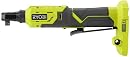 | Best for Awkward Angles Ryobi ONE+ P344 RatchetCheck Price | Check Price |
 | Best for Mixed Drive Sizes CRAFTSMAN CMCF935B V20 RatchetCheck Price | Check Price |
- I would pick by nuisance level first, since the right cordless ratchet pays off on the bolts you remove twenty at a time.
- For awkward angles, a moving head can beat a stronger motor, which is where the Ryobi P344 earns a look.
- If your socket drawer is mixed, a multi anvil tool like the CRAFTSMAN CMCF935B keeps the setup cleaner and quicker.
- Do not let accessory counts sway you unless the batteries, charger, and sockets are pieces you will truly use.
- For frequent garage use, I would favor the tool that feels controlled at low speed over the one with the loudest spec sheet.
- Damaged threads are the other half of this job: once a fastener has been forced, it wants chasing with a tap and die set before anything goes back in.
1. Milwaukee 2457-20 M12 Sub-Compact Ratchet

Milwaukee earned its cordless ratchet reputation the old fashioned way, by showing up in toolboxes for years and not feeling like a science project. This 3/8 inch M12 ratchet is still the one I picture first when someone says compact cordless ratchet, mostly because the size makes sense under a hood. At 10 3/4 inches long, 1.9 lbs, and with a 3/4 inch head, it slips into spots where a bulkier tool turns into a knuckle buster.
For weekend automotive work, I like it best after the stubborn part is already handled. Crack a bolt loose by hand, then let the Milwaukee spin it out at 250 RPM. Valve covers, battery trays, brackets, splash shields, hose clamps with socket heads, interior fasteners, that kind of work is where it saves time. The front light helps when your face is wedged near the radiator support, and the battery meter keeps you from guessing halfway through a job. Small thing, big annoyance avoided.
The 35 ft lbs rating tells the truth about its role. This is not the tool I grab for rusty suspension hardware or anything that has been heat cycled since the Bush administration. Push it like an impact wrench and you are asking too much. The built in electronics are meant to help manage heat and battery stress, but I still treat this like a speed tool, not a breaker bar. If it stalls, I stop and go manual. That habit saves tools.
Compared with the ACDelco ARW1209P, Milwaukee does not win on raw value for a first time buyer. The ACDelco brings 45 ft lbs under power, up to 100 ft lbs by hand, plus the battery, charger, and sockets in the box. That is hard to ignore. Milwaukee makes more sense if you already own M12 batteries, care about the smaller feel, and want variable trigger control in a body that has held up for years.
So does it still deserve the benchmark talk? For compactness and staying power, yes. For maximum torque per purchase, no. Milwaukee sets the standard here, but if you want to spend much less and still get batteries included, the next option gets interesting fast.
- Compact 3/4 inch head
- Light 1.9 lb body
- Useful light and battery meter
- Proven M12 reliability
- Battery sold separately
- Limited 35 ft lbs torque
2. AOBEN 12V Cordless Ratchet Wrench Set

Opening the AOBEN kit, the appeal is pretty obvious. You get the ratchet, two 2000mAh batteries, charger, case, six sockets, an extension bar, and an adapter. For a first cordless ratchet, that matters. Nobody wants to buy a tool, then realize the battery costs nearly as much as the thing sitting in the box.
The surprise is that the numbers are not timid. This 12V 3/8 inch ratchet is rated at 40 foot pounds and 280 RPM, which puts it right beside the Milwaukee M12 on paper, and a little ahead of it in both torque and speed. For spark plugs, valve cover bolts, skid plate hardware, battery brackets, and the endless little fasteners hiding in an engine bay, that is plenty. I would still crack stubborn bolts loose by hand first, then let the AOBEN spin them out. That is how cordless ratchets live longer.
Where the price shows up is in the finish. The included sockets are not the ones I would reach for if I already had a decent set in the drawer. The battery fit can feel tight, and the plastic body is more workbench tool than pro shop heirloom. Milwaukee feels more refined and has better electronics behind it, but Milwaukee also asks you to buy into its battery setup if you are not already there.
I think the AOBEN makes the most sense for weekend wrenching and first time buyers who want one case that gets them moving. It proves you can get into cordless ratcheting without spending big, but stepping into professional grade territory means looking higher up the ladder.
- Complete starter kit
- Two included batteries
- 40 foot pound rating
- Basic included sockets
- Tight battery fit
3. DEWALT DCF510B 20V MAX XR Ratchet

The big trick with the DEWALT DCF510B is right up front: it runs both 3/8 inch and 1/2 inch drive setups from the same cordless ratchet. For garage work, that matters. I can live in 3/8 inch for brackets, covers, suspension odds and ends, then swap to 1/2 inch when the sockets get larger and the job starts feeling less dainty.
The 75 ft lbs rating puts this at the serious end of cordless ratchets. I still would not treat it like an impact wrench for crusty suspension bolts or anything that has been marinating in road salt since 2009. Break those loose by hand first if needed. Once the fastener is moving, this is the kind of ratchet that saves wrists, time, and a few choice words under the hood. The variable trigger helps too, especially around softer hardware where full send is a bad idea.
Build quality is part of the appeal here. The sealed head and reinforced housing are the sort of details I like on an automotive tool because oil, grime, and solvent are not rare visitors in a real garage. The LED is useful under dashboards and around wheel wells, and the trigger lock is a nice bit of insurance when the tool is bouncing around in a drawer or tool bag.
Compared with the Craftsman CMCF935B, this DEWALT gives up the 1/4 inch option but hits harder with 75 ft lbs and a brushless motor. The Craftsman has broader anvil coverage with 1/4, 3/8, and 1/2 inch drives, which is handy for lighter mixed work. I see the DEWALT as the better fit for heavier automotive jobs, especially if I already own 20V MAX batteries.
The catch is cost and size. It is sold bare, so the value makes far more sense inside the DEWALT battery world. It is also not the smallest ratchet for tight engine bays. If 75 ft lbs is more than your jobs need, a lower cost option may be plenty.
- 3/8 and 1/2 drives
- 75 ft lbs torque
- Brushless motor control
- Sealed automotive friendly head
- Battery and charger separate
4. ACDelco ARW1209P G12 Series Ratchet

This ACDelco is the cordless ratchet I’d call the sleeper in the pile. It does not wear the premium badge like the Milwaukee M12, and it is not chasing the lowest shelf like the AOBEN, but the torque number gets my attention. At 45 foot pounds under power, it edges past Milwaukee’s 35 foot pounds and even noses ahead of AOBEN’s 40. For a home mechanic pulling skid plate bolts, seat brackets, battery trays, and the usual engine bay hardware, that extra grunt matters.
The kit is a big part of the appeal. You get the ratchet, one 12 volt battery, charger, and an 8 piece socket set, so you are not pricing a bare tool and then getting ambushed at checkout by the battery bill. Milwaukee feels more refined in the hand and carries the slimmer, more polished tool vibe, but buying into it can cost more once the missing pieces are added. AOBEN packs a lot in for less, including more battery coverage, but ACDelco lands in a nice middle lane with stronger torque and a more trustworthy feel.
There are trade offs. This one is heavier than the Milwaukee by about a pound, and you feel that if you are working overhead or reaching deep into a wheel well. The battery tabs can be stubborn, which is one of those little shop annoyances that gets less funny after the third swap. I also wish it had variable speed, because delicate reassembly takes a lighter touch. My tip is simple: start threads by hand, snug with the ratchet, and finish critical fasteners with a torque wrench.
If you want maximum polish, Milwaukee still has the edge. If you want the cheapest complete bundle, AOBEN makes sense. I think ACDelco is the smart middle pick for budget minded home mechanics who want real torque without paying for a trophy logo.
- 45 foot pounds powered torque
- Complete starter kit included
- Solid build for home garages
- Heavier than Milwaukee M12
- No variable speed trigger
5. Ryobi ONE+ P344 Ratchet
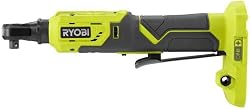
If I already had a pile of Ryobi ONE+ batteries on the bench, this P344 would make a lot of sense. That is the whole pitch here. You skip another charger, grab a familiar pack, and get a 3/8 inch cordless ratchet that fits right into the weekend garage routine.
The four position head is the part I like most. On furniture assembly, appliance panels, mower work, or any job with twenty identical bolts staring back at me, being able to swing the head into a better angle saves knuckles and patience. The included 4 inch extension helps too, especially when the fastener is tucked just past where the tool body wants to stop.
I would not buy it expecting impact wrench behavior. Tight rusted hardware still needs a hand tool to crack loose, and starting bolts by hand first is smart since there is no clutch to save you from getting clumsy. Compared with the Milwaukee M12 ratchet, the Ryobi wins on battery convenience and head flexibility if you are already in the green tool world. Milwaukee has the slimmer nose and more torque, so it is better in cramped engine work.
For repetitive fastening, this is a practical buy. If you are not tied to one battery platform, the next style of ratchet starts making a stronger case with more drive options.
- Uses ONE+ batteries
- Four position head
- Good for repetitive fastening
- Weak on stuck bolts
6. CRAFTSMAN CMCF935B V20 Ratchet

This Craftsman feels like one of those new tools with a smart idea behind it: carry one cordless ratchet and cover three drive sizes. For a V20 owner, that promise matters. I can see it bouncing between lawn mower maintenance, under dash work, battery tray bolts, and light automotive jobs without making me stop to grab a different ratchet every ten minutes.
The trick is the three anvil setup. You get 1/4, 3/8, and 1/2 inch capability from the same tool, which is the real reason I would buy this over a plain 3/8 cordless ratchet. The 300 RPM top speed is enough for running fasteners in and out, and the trigger lets you ease into starts instead of just sending it. With 40 ft lbs, I would still crack stubborn bolts loose with a breaker bar first. That is cordless ratchet life, not a scandal.
Next to the DEWALT DCF510B, Craftsman wins on drive size flexibility. DEWALT gives you 3/8 and 1/2 inch, but brings a brushless motor, 75 ft lbs, and a sealed build to the fight. If I were doing heavier vehicle work every weekend, I would lean DEWALT. If I already had V20 batteries and wanted one ratchet for mixed household and garage chores, the Craftsman makes better sense.
My only real pause is trust. The rating is excellent, but the sample is tiny, so long term confidence is still forming. As the last pick here, I would call it the flexible newcomer: clever, useful, and worth watching closely before calling it settled.
- Three drive sizes
- V20 battery compatible
How to Choose the Right Cordless Ratchet for Your Projects
Torque vs. Tight Space Access
Cordless ratchets are not impact wrenches, and that is a good thing. I use them to spin fasteners in and out after the bolt is broken loose, not to wage war on rusted suspension hardware. More torque usually means a larger head, a longer body, or a heavier battery hanging off the handle. That can turn a handy tool into a knuckle bruiser under a dashboard or between an engine and radiator.
For spark plugs, hose brackets, valve covers, skid plate bolts, battery trays, and light brake hardware, a 3/8 inch ratchet around the 30 to 40 foot pound range covers a lot of weekend work. The Milwaukee M12 Sub-Compact Ratchet sits in that sweet spot with 35 foot pounds and 250 RPM, which is why so many garage owners keep one nearby. It moves fast, fits well, and still leaves final tightening to your calibrated hand or torque wrench.
If your main goal is breaking seized bolts loose, buy an impact wrench first and a cordless ratchet second. A cordless ratchet saves time on repetitive fasteners. It is not the tool I reach for when a caliper bracket bolt has spent ten winters bathing in road salt. And when that bolt rounds off instead of breaking free, no amount of torque helps — it comes out with a bolt extractor set.
Battery Platform Compatibility
Batteries are where the real bill hides. If you already own Milwaukee M12, DEWALT 20V MAX, Ryobi ONE+, or CRAFTSMAN V20 tools, staying inside that battery family can save you from buying another charger and another pair of packs. I care less about matching colors in the toolbox and more about grabbing one charged battery that runs three tools.
This is where the Ryobi ONE+ P344 makes sense for a homeowner who already has Ryobi drills, lights, or inflators. Same idea with the DEWALT DCF510B if you are already deep into 20V MAX packs. A bare tool can look like a steal until you realize it does not include the battery that makes it do anything besides sit there looking smug. If the 20V MAX shelf is where you are heading anyway, the drill is the tool that justifies it fastest — I sorted that lineup in my DEWALT cordless drill roundup.
Before buying a bare tool, add the cost of a compatible battery and charger to your cart and compare that total against a full kit. I have seen plenty of shoppers pick the cheaper listing, then spend more by the time the tool is ready to work.
Drive Size and Anvil Versatility
Drive size decides which sockets fit the ratchet and how much tool belongs in your hand. A 1/4 inch drive shines on interior trim, small engine covers, clamps, and delicate fasteners. A 3/8 inch drive handles most automotive and home repair work. A 1/2 inch drive belongs with larger sockets, heavier brackets, trailer parts, mower blades, and bigger chassis hardware.
Most weekend DIYers live in 3/8 inch territory. It gives enough reach and strength without making the head too bulky. If I had to keep only one cordless ratchet in a home garage, I would start there.
- Choose 1/4 inch for small fasteners, tight trim work, and low torque jobs.
- Choose 3/8 inch for general automotive repair, brake work, brackets, and household projects.
- Choose 1/2 inch for larger sockets and heavier hardware where space is less cramped.
Interchangeable anvils cut down on adapter stacking. The DEWALT DCF510B uses a dual anvil setup for 3/8 inch and 1/2 inch sockets, while the CRAFTSMAN CMCF935B covers 1/4, 3/8, and 1/2 inch from one tool. That matters because socket adapters add length, wobble, and one more little piece to lose under the workbench.
Variable Speed and Clutch Control
A variable speed trigger is not a luxury feature. It lets you start threads slowly, feel the fastener settle, and then speed up once you know everything is lined up. Aluminum threads, plastic housings, and small studs do not forgive a trigger that behaves like an on switch.
I like a ratchet that creeps before it sprints. On spark plug coils, intake brackets, and small cover bolts, that slow start keeps the socket from walking and the bolt from cross threading. The DEWALT DCF510B includes a variable speed trigger, which pairs well with its dual anvil range because you are likely to use it across more fastener sizes.
Run the first few turns by hand or at the lowest trigger speed any time the bolt threads into aluminum. Once the bolt seats cleanly, let the ratchet do the repetitive spinning. Final torque still belongs to a hand ratchet or torque wrench.
Build Quality and Durability
Spec sheets love torque and RPM, but the garage tests a tool with grease, brake cleaner, dust, drops, and bad angles. A sealed head helps keep grit out of the gear train. An oil resistant housing matters when your gloves are covered in old power steering fluid. A recessed direction switch keeps you from bumping reverse with your thumb while wedged beside a firewall.
Brushless motors also deserve a look. They run with less internal wear than brushed motors, and they usually stretch battery runtime under repeated use. The DEWALT DCF510B combines a brushless motor with a sealed, solvent resistant body, which is the kind of construction I want if the tool is going to live near brake cleaner and dirty sockets.
- Look for a sealed or protected ratchet head.
- Check whether the grip and housing resist oil and common shop solvents.
- Favor recessed controls that are hard to bump by accident.
- Choose brushless if you expect frequent garage use.
Weight balance matters too. A compact head with a battery hanging off the end can still feel awkward after ten minutes inside an engine bay. If the listing shows tool weight without the battery, remember that the number is only half the story.
Kit vs. Bare Tool Value
A kit can be the better buy for someone starting from scratch. The AOBEN 12V Ratchet Set bundles two batteries, sockets, and a case, so the tool is ready for weekend work right away. The ACDelco ARW1209P also leans into kit value by including a battery, charger, and an 8 piece socket set instead of making you chase parts separately.
Bare tools make sense when you already own the batteries. Mid range and pro tools often ship without a pack or charger, which keeps the listing lower but shifts the real cost to your existing setup. That is fine if your charger is already on the shelf. It stings if you have to buy into a new platform for one ratchet.
Compare kits by what you will use, not by how many pieces are in the case. A second battery is useful. A charger is mandatory if you are new to the platform. A socket set is handy, but only if the sizes match your projects and the sockets are not filler.
Frequently Asked Questions
Can a cordless ratchet replace an impact wrench?
No. A cordless ratchet is built for speed and access, not for breaking loose seized fasteners. Even the DEWALT DCF510B at 75 ft lbs is still a run down tool in my book, not a bolt buster.
Use an impact wrench or breaker bar to crack the fastener loose first. Then grab the cordless ratchet to spin it out without turning your wrist into a pretzel.
Do I need a 3/8″ or 1/2″ drive cordless ratchet?
For most DIY automotive and household work, 3/8″ covers the bulk of the job. Under hood bolts, brackets, trim work, small engine repairs, and general garage projects all fit that size well.
Go 1/2″ if you spend time on suspension, drivetrain, or larger equipment. The DEWALT DCF510B and Craftsman CMCF935B use interchangeable anvils, which saves you from picking one size and regretting it later.
Is it worth buying a budget cordless ratchet like the AOBEN?
For occasional weekend use, yes. The AOBEN 12V kit includes two batteries and sockets, so you can start working without piecing together a setup.
If you plan to use a ratchet every day, I would step up to Milwaukee, DEWALT, or ACDelco. The difference shows up over time in trigger feel, battery consistency, and how well the tool survives shop life.
How much torque do I really need in a cordless ratchet?
Most DIY jobs land comfortably in the 35 to 45 ft lbs range. That handles under hood fasteners, caliper guide pins, interior bolts, hose clamps, and plenty of mower or small engine work.
Look at 75 ft lbs, like the DEWALT DCF510B, if you regularly deal with exhaust hardware, suspension parts, or larger outdoor equipment. More torque helps, but access and control still matter more than bragging rights.
Should I buy a bare tool or a complete kit?
Buy the bare tool if you already own batteries in that system, such as Milwaukee M12, DEWALT 20V MAX, Ryobi ONE+, or Craftsman V20. It keeps the cost down and avoids another charger on the bench.
If you are starting from scratch, a kit is the cleaner move. The AOBEN and ACDelco ARW1209P kits come with the pieces you need to get working right away.
Can I use a cordless ratchet for lug nuts?
I would not. Lug nuts are usually torqued around 80 to 100 ft lbs or more, and the strongest cordless ratchet here still tops out below what many wheels need.
Use an impact wrench to remove lug nuts, then finish installation with a torque wrench. Your wheels deserve better than a guess and a hopeful grunt.