

Tap and die sets earn their keep when a bolt won’t start, a threaded hole is packed with rust, or a small repair is one stripped thread away from becoming a trip to the hardware store. I’ve used these kits on real shop jobs, mower hardware, brackets, old truck parts that hadn’t moved since the Clinton administration, and the gap between a smooth cut and a mangled mess shows up on the very first turn.
What follows are six of the best tap and die sets I’d actually recommend to someone working in a home garage. Not a machinist. Not a production shop. A person with a project halfway apart on a Saturday who needs clean threads and doesn’t have time for garbage tooling. A good set isn’t just a box of shiny taps. It’s the kit you grab when the hardware store is closed, your knuckles are bleeding, and you’d rather fix the threads than order a new part and wait three days.
- If the fastener is already rounded off or snapped, that comes first — see my bolt extractor picks.
Best Tap And Die Sets in 2026
| Image | Model | |
|---|---|---|
 | Best Overall GEARWRENCH 114-Piece SetEditor's Choice  Check Price | Check Price |
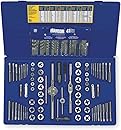 | Most Complete Kit IRWIN 117-Piece SetCheck Price | Check Price |
 | Best All-in-One Value toolant 127-Piece SetCheck Price | Check Price |
 | Best Compact Ratcheting Set GEARWRENCH 3887 SetCheck Price | Check Price |
 | Best For Mixed SAE And Metric Repairs NEIKO 76-Piece KitCheck Price | Check Price |
 | Best Budget Starter Set Anfrere 80-Piece KitCheck Price | Check Price |
Worth naming the adjacent case, since the two jobs run together: a tap restores a thread that is damaged, but a screw with a chewed-up head has to come out before you can chase anything. I covered that half in my screw extractor roundup.
1. GEARWRENCH 82812 114-Piece Ratcheting Set

If I were setting up a serious home garage or a busy repair bench, this GEARWRENCH 82812 would sit near the top of my list. It covers SAE and metric without feeling like some token assortment where half the sizes are useless — the range goes from small machine-screw sizes up through the bigger common stuff, and having taps, dies, thread gauges, extractors, adapters, extensions, and multiple handles in one case means a lot less drawer-digging on a Saturday afternoon.
The ratcheting handle is the real selling point here. Working in tight spots — engine parts, brackets, awkward under-the-bench repairs — that short handle movement is a genuine advantage. The tap and die holding system uses adapters too, which makes the whole kit more flexible than those old basic sets with one stubborn handle and a prayer.
I’d still inspect the taps before first use. Clean off any tiny machining bits, use cutting oil like a civilized person, and don’t skip the quarter-turn-and-back method even if the threads feel easy. One thing that bugs me: the ratcheting handle doesn’t have a true locked position. Sometimes I want that old-school back-and-forth control, no clicking, just direct feel. It’s a small gripe for a big kit, but it’s there.
Pros:
- Large 114-piece assortment with both SAE and metric coverage.
- Ratcheting handles make tight-space threading work easier.
- Includes useful extras like thread gauges, screw extractors, adapters, and extensions.
- Carrying case keeps the many pieces organized and easier to access.
Cons:
- Ratcheting handle does not offer a true locked, non-ratcheting mode.
- Worth inspecting and cleaning before first use in case any small machining debris is present.
2. IRWIN Hanson 117-Piece Deluxe Tap And Die Set
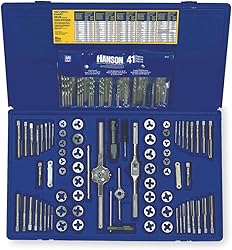
This IRWIN Hanson set is the big box on the bench for folks who do more than chase the occasional rusty bolt. Where the GEARWRENCH 82812 above wins on ratcheting convenience, this one wins on sheer coverage — fractional, metric, machine screw, and small pipe threads all in the same case. If you run into different thread standards every week, that breadth matters.
High-carbon steel construction puts this solidly in the serious maintenance territory. Not a bargain-bin emergency kit. But here’s the thing — high-carbon steel isn’t magic. Use proper cutting fluid, back the tap out to clear chips, and don’t force it just because you want to finish before dinner. That advice applies to every set on this list, but I mention it here because a 117-piece kit creates a false sense of invincibility. More taps doesn’t mean they’re indestructible.
The case holds a lot of small pieces, and “holds” is doing heavy lifting in that sentence. Open it flat, check the contents right away, and make sure sizes match the chart. The included drill bits are a nice convenience, though if you already own a deep drill index, that portion of the kit loses some of its appeal. You might wish those drill-bit slots held a few extra dies instead.
Pros:
- Very broad size range across machine screw, fractional, metric, and small pipe threads.
- Includes drill bits, screw extractors, thread gauges, and multiple tap and die handles.
- Good fit for automotive repair, machinery work, and a well-equipped home shop.
- High-carbon steel taps and dies give it a more capable feel than small basic kits.
Cons:
- The case needs to be opened carefully so loose pieces do not get scattered.
- Price is high, especially if only a few common sizes will see regular use.
3. toolant 127-Piece Ratcheting Tap And Die Set

This toolant set hits a sweet spot for the home garage. SAE and metric coverage, included drill bits that take the guesswork out of tapping new holes — matching the bit to the tap is one of those little steps that can literally make or break the job, especially with small sizes.
The ratcheting T-handle is the standout feature. In tight spots or repetitive work, it saves real wrist strain compared to a standard tap wrench. Reversible action, short swing, built-in die guide — it all works toward keeping threads straight instead of crooked. The double-layer case organization is a genuine plus. I’ve owned sets where finding the right size took longer than the actual repair.
Treat this as a general-purpose threading and repair kit, not a production workhorse. The value is strong for 127 pieces — especially with the case and the stated warranty (180 days on accessories, one year on the main body). That said, the plastic storage parts will probably show wear before the cutting tools do, so handle the case like it owes you money.
Pros:
- Large SAE and metric selection for common thread repair jobs.
- Ratcheting T-handle design makes hand tapping less tedious.
- Included drill bits help reduce sizing mistakes before tapping.
- Organized two-layer case keeps the many small parts easier to find.
Cons:
- Best suited for general-purpose work, not heavy-duty production use.
- Plastic case components may be the weak link if handled roughly.
4. GEARWRENCH 3887 77-Piece Ratcheting Set

Yes, another GEARWRENCH — and no, it’s not a typo. The 3887 is the smaller sibling of the 82812 reviewed at #1. Same ratcheting concept, same brand quality, but 77 pieces instead of 114. If you looked at the 82812 and thought “I don’t need that many sizes and I’d rather spend less,” this is your set.
The ratcheting setup does the same job here — short handle movement, direction switch, cramped-space friendliness. The die guide helps with straight starts, which is half the battle in any threading job. SAE and metric coverage, pitch gauges, adapters, and a case that keeps everything from playing hide-and-seek.
Where this set falls short of its bigger brother is piece count, obviously, but also the absence of some of those extras like screw extractors and extensions. For home shop work, automotive repair, and the occasional bolt rescue, it covers the ground just fine. But if you work on older American equipment and imported machines in the same week, the 82812’s broader size range might save you from buying individual taps later. Go easy on the smaller sizes no matter which one you pick — small taps snap without warning if you get heavy-handed.
Pros:
- Broad SAE and metric assortment in one organized kit.
- Ratcheting handle helps when there is not room for full turns.
- Includes pitch gauges and adapters, so the kit is more complete from the start.
- Good fit for occasional shop, automotive, and home repair work.
Cons:
- Small taps still need a light touch to avoid snapping.
- Fewer extras compared to the larger GEARWRENCH 82812 — no extractors or extensions included.
5. NEIKO 76-Piece SAE/Metric Tap And Die Set

The kind of kit you buy for the problem that shows up out of nowhere — a chewed bolt on a Sunday, a sloppy threaded hole in something you can’t identify, some mystery fastener on a weekend repair. It covers metric and SAE, including UNC, UNF, and a 1/8-inch NPT size. That broad spread means I’m probably not stopping mid-project to hunt down a single tap at the hardware store.
GCr15 bearing steel with a black oxide finish gives this set a respectable feel for the price. It’s a practical repair kit, not something I’d lean on for daily production work. Use cutting oil. Break chips. Don’t brute-force a small tap like it’s a stubborn lug nut — that’s how you end up with a broken piece of hardened steel jammed in a hole and a very different kind of Saturday project.
The kit comes with handles, pitch gauges, and a screwdriver, which makes it more turnkey than a bare box of cutters. The weak spot? The storage case. It’s not terrible, but I’d check every slot on arrival and make sure all sizes and handles are actually present before tossing the box. If you’re choosing between this and the Anfrere 80-piece below, the NEIKO edges ahead on thread type coverage (those UNF and NPT sizes), while the Anfrere keeps things simpler and cheaper.
Pros:
- Includes both metric and SAE taps and dies for a wide range of common repairs.
- Good overall coverage with UNC, UNF, and 1/8-inch NPT included.
- Comes with handles, gauges, and a case, so the kit is ready to use.
- Solid value for occasional threading and rethreading jobs.
Cons:
- The storage case is not the most confidence-inspiring part of the kit.
- Check contents on arrival — missing or shifted pieces have been reported.
6. Anfrere 80-Piece SAE/Metric Threading Kit

The Anfrere 80-piece is the kind of kit I keep around for when a bolt hole goes ugly and a trip to the shop feels like admitting defeat. SAE and metric, taps and dies from small machine-screw territory up through M3-M12 metric work — it fits well in a garage where old lawn equipment, vehicles, furniture hardware, and random mystery fasteners all show up in the same week.
This is a practical repair and maintenance set, full stop. The included gauges, tap handles, die handles, small chuck-style holders, and screwdrivers all live together in the case. The steel is hardened GCr15 with a 60 HRC rating, meant for materials like steel, aluminum, copper, and cast iron. For cleaning up damaged threads or cutting occasional new ones, that’s a useful range. Not exotic, but it gets the job done.
My main gripe is readability and holding power. The size markings can be a pain to read when I’m already irritated at a stripped fastener. And the tap-holding handle is the weakest part of the kit — it doesn’t grip with the confidence I want. Compared to the NEIKO at #5, the Anfrere skips UNF and NPT coverage but comes at a lower price point and a slightly simpler layout. If you mostly work with standard-pitch fasteners and want a starter set without overthinking it, this one makes sense. Just don’t confuse it with a premium daily-use production tool.
Pros:
- Includes both SAE and metric taps and dies in one case.
- Good range for common garage, vehicle, and home repair threading jobs.
- Comes with gauges and multiple handle options, so the kit is ready to use.
- Useful value for occasional repair work and emergency bolt-hole rescues.
Cons:
- Size markings may be difficult to read.
- The tap handle is a weak point and may not grip as confidently as you’d want.
How to Choose the Best Tap and Die Set for Your Shop
Alright, so you’ve seen the specific sets — now let’s talk about what actually separates a good tap and die set from one that’ll snap a tap off in a blind hole on a Saturday afternoon and ruin your whole weekend. I’ve been there more times than I’d like to admit, and almost every time it came down to buying the wrong set for the job.
Material and Hardness: This Is Where Cheap Sets Will Betray You
The single biggest differentiator between tap and die sets is what they’re made of. Three main options out there: carbon steel, high-speed steel (HSS), and cobalt or titanium-coated HSS. Carbon steel is fine for soft stuff — aluminum, brass, mild steel — if you’re just chasing existing threads. But the moment you try cutting new threads in anything harder, carbon steel taps dull fast or just snap. If you’re only buying one set, get HSS. It handles the broadest range of materials without breaking the bank or breaking in the hole.
Cobalt and titanium nitride (TiN) coated taps step things up for stainless steel and hardened fasteners. The coating cuts friction and heat, which is exactly what kills taps prematurely. These cost more, sure, but if you’re regularly wrestling with exhaust manifolds, stainless hardware, or anything automotive that’s been heat-cycled a thousand times, they pay for themselves. Reputable brands manufacture to specs like ASME B94.9 for taps and ASME B94.6 for dies — those standards define what quality tooling should look like. Bargain-bin sets often don’t bother.
SAE vs. Metric vs. Both: Don’t Guess
Sounds obvious, but I can’t tell you how many guys buy an SAE-only set and then discover half the project is metric. Anything built after about 1980 — cars, motorcycles, imported machinery — you need metric. Older American trucks, lawnmowers, general household stuff — that’s SAE. For most home shop DIYers, a combination set with both SAE and metric in the most common sizes is the smartest first purchase. The GEARWRENCH 82812, IRWIN Hanson 117-piece, and toolant 127-piece reviewed above all take this approach, which is a big reason they made the list.
Combo sets have a tradeoff though: they give you breadth but usually skip oddball sizes. You’ll get your 1/4″-20 and M8x1.25, but probably not a 5/16″-18 fine or M10x1.0. Know what you work on most, and fill in the gaps with individual taps later.
Taper, Plug, and Bottoming Taps: Know the Difference
Most sets come with taper taps (sometimes called starter taps). These have a long chamfer at the tip that makes them easy to start in a hole — great for through-holes. But if you need to thread to the bottom of a blind hole, say a bolt hole in an engine block, a taper tap leaves you with several unthreaded turns at the bottom. That’s where plug taps and bottoming taps come in.
A plug tap has a shorter lead-in and gets threads closer to the bottom. A bottoming tap cuts right to the floor. Ideally you’d use all three in sequence for a blind hole: taper first, then plug, then bottoming. Most budget sets only include one style per size, so check before you buy. If you’re doing engine work or any repair where blind holes are common, this matters way more than you think.
Thread Pitch: UNC, UNF, and Why It Matters
On the SAE side, you’ll encounter UNC (coarse) and UNF (fine) thread pitches. Coarse threads are your everyday bolts — more forgiving, easier to start, better in softer materials. Fine threads are stronger in tension and used where vibration resistance matters (suspension, cylinder heads, precision assemblies). Most starter sets lean heavily toward UNC. That’s fine for 80% of home shop work, but if you do any automotive or precision stuff, make sure the set includes at least a few UNF sizes. The NEIKO 76-piece from our reviews includes both UNC and UNF, which is part of why it stands out at its price range.
Metric is similar — standard pitch versus fine pitch. An M8x1.25 is standard, M8x1.0 is fine. Budget combo sets typically only include standard pitch. No shame in that, just know the limitation before you’re elbow-deep in a project at 9 PM with the wrong tap in your hand.
Handle Quality and Included Accessories
A tap is only as good as the wrench turning it. Cheap T-handle wrenches and die stocks with sloppy jaws let your tap wobble, and a wobbling tap is a snapping tap. Look for sets with adjustable tap wrenches that have smooth, positive-grip jaws — they make a massive difference in keeping things aligned, especially when starting a tap.
Some sets include drill bits sized for each tap. That’s convenient when the drills are decent quality — some kits throw in soft bits that barely survive one hole in mild steel. The toolant 127-piece and IRWIN Hanson both include matched drill bits, and they’re serviceable for general use, though they won’t replace a dedicated drill index. The bits that do come in these kits also blunt quickly, and a tap started in an undersized worn hole is a tap you will snap — my drill bit sharpener guide covers keeping them true. A thread pitch gauge is another nice inclusion — it helps you identify mystery bolts before you grab the wrong tap. Here’s what a well-equipped set should ideally include:
- Adjustable tap wrenches (at least two sizes — small and large)
- Die stock handle with guide
- Thread pitch gauge (SAE and/or metric)
- Drill bits matched to each tap size
Case and Organization: More Important Than You Think
Taps rolling around loose in a toolbox drawer is how you chip cutting edges and lose tiny sizes forever. Every decent set comes in a blow-molded case with labeled slots, and the case quality tells you something about the manufacturer’s overall attention to detail. If the taps rattle around in a flimsy case, I have low expectations for the tooling inside.
Look for cases where each piece is clearly labeled with its size. When you’re under a car, hands covered in penetrating oil, squinting at tiny stampings on a tap shank — that label on the case slot is a lifesaver. I noted this as a weak point on both the NEIKO and Anfrere sets in the reviews above: the tooling is fine for the money, but the cases feel like an afterthought. Some higher-end sets use metal index cases instead of plastic, which hold up better long-term in a shop environment.
Safety Tips That Aren’t Optional
Always wear safety glasses when tapping — broken taps send shrapnel, and it happens without warning. Beyond that, use cutting oil or tapping fluid on every cut. I know guys who run taps dry “because it’s just aluminum” and then wonder why their threads are torn up. Lubrication reduces heat and friction, gives you cleaner threads, and extends tap life dramatically. The one exception is cast iron, which actually prefers to be tapped dry.
The quarter-turn method is non-negotiable: turn the tap forward a quarter to half turn, then back it off to break the chip. This clears debris and prevents binding. If a tap starts to feel stiff, stop. Back it out, clear the chips, add more lube, and try again. OSHA’s hand and power tool guidelines make the point that using tools within their intended purpose and keeping them in good condition are baseline safety requirements — and that absolutely applies to threading tools. A dull or damaged tap is a dangerous one.
Domestic vs. Imported: The Honest Truth
A lot of tap and die sets on the market are manufactured overseas, and that’s not automatically a problem. What matters is whether the manufacturer holds the factory to actual dimensional and hardness standards. Brands like GEARWRENCH and IRWIN maintain quality control processes even when sourcing internationally — that’s why their sets feel and cut differently from no-name imports you find in bargain bins.
The budget sets I reviewed here, like the Anfrere and NEIKO, are imported kits. They work. They cut threads. But I wouldn’t compare their steel to a Vermont-made tap, and I wouldn’t expect the same longevity under heavy use. For occasional home shop work, the tradeoff is absolutely worth it. For daily commercial use, spend more and get tooling rated to ASME B94.9 and B94.6 standards — your future self will thank you when a tap doesn’t snap in a $400 casting.