

We’ve all been there. You lean into the wrench, expecting resistance, and instead you feel that sickening give as the last good corner of the bolt head rounds off. Now it’s smooth. Now your wrench just spins in place, mocking you. And that rusty fastener sits there like it owns the place.
Here’s the good news. You don’t have to break out the drill and go to war. The right tool grabs what your socket can’t, and finding the best bolt extractor for the job is mostly about being honest with yourself about your skill level and your budget. Spend too little and you’ll snap the extractor off inside the bolt. Spend too much on features you won’t use and you’ve wasted money that belonged in the beer fund.
So let’s match you with the right one. I’ll show you a couple of extractors I trust, explain who each is actually built for, and help you dodge the mistakes that turn a five minute fix into a ruined afternoon.
Best Bolt Extractors in 2026
| Image | Model | |
|---|---|---|
 | Best Overall ROCKETSOCKET Extraction Socket SetEditor's Choice  Check Price | Check Price |
 | Best Budget Value GRLCOOD Bolt Extractor KitCheck Price | Check Price |
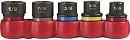 | Best Brand-Name Pick Milwaukee Shockwave Impact Extractor SetCheck Price | Check Price |
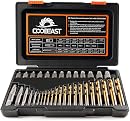 | Best for Flush Breaks Coobeast Screw Extractor SetCheck Price | Check Price |
 | Best for Broad Coverage THINKWORK Broken Bolt Extractor KitCheck Price | Check Price |
 | Best for Impact Users toolant Impact Bolt Extractor SetCheck Price | Check Price |
 | Best for Tight Spaces KNIPEX TwinGrip PliersCheck Price | Check Price |
How to Pick the Right Bolt Extractor for the Job
Before you drop money on a set, you need to know what kind of problem you’re solving. A rounded-off lug nut, a snapped bolt sitting flush with the block, and a rusted stud that won’t budge are three different jobs. No single tool wins all three. Here’s how I sort through the options before I buy.
Extractor Type: Sockets vs. Spiral Bits vs. Multi-Spline
There are three families, and they don’t compete so much as cover different failures. Socket-type extractors slip over a bolt head or nut that’s been rounded off. The inside has aggressive teeth that bite into the flats as you turn. These are your go-to for a stripped hex head that still has a head to grab, and they run on a ratchet or impact wrench. The RocketSocket set and the Milwaukee Shockwave set both live in this category.
Spiral flute extractors are the ones people picture when they hear “screw extractor.” You drill a pilot hole into the center of the broken shank, then thread the reverse-tapered bit in counterclockwise until it locks and backs the stub out. These handle bolts that snapped below the surface, where there’s no head left to grab. Multi-spline extractors work the same territory but use straight splines that hammer into the pilot hole, giving you a tighter mechanical lock on hardened fasteners that a spiral bit would slip inside.
Kits like the Coobeast set bundle all three styles, which makes sense if you don’t know yet what you’ll face. Match the extractor style to whether the bolt still has a usable head or snapped flush, because the wrong style just chews up your fastener worse.
Material and Hardness
An extractor has to be harder than the bolt it’s biting, or it deforms and slips. That’s the whole game. Cheap pot-metal extractors round off on the first hard stud and leave you with two problems instead of one. The materials worth paying for are chrome-molybdenum (Cr-Mo), cobalt high-speed steel (usually M-42), and chrome vanadium.
Hardness gets measured on the Rockwell C scale, or HRC. A quality extractor socket runs somewhere around 55 to 62 HRC, hard enough to bite a Grade 8 bolt without folding. Cobalt HSS drill bits matter for the spiral-flute side because you’re often drilling into hardened steel, and plain HSS goes dull fast on that. The RocketSocket set leans on American drawn steel and a helical tooth that tightens as torque climbs, which is the behavior you want under a stubborn fastener.
Some kits mix materials by job. The THINKWORK 54-piece kit pairs Cr-Mo extractors with M-42 cobalt drill bits, so the drilling side and the gripping side each get the right steel. Skip any set that won’t tell you the steel type or hardness, because “hardened alloy steel” with no HRC number usually means it’s soft.
Size Range and Drive Compatibility
The fastest way to ruin a Saturday is to reach for your kit and find the one size you need was never in it. Check the range against the fasteners you actually turn. A good general set spans roughly 6mm to 19mm plus the common SAE equivalents.
Drive size matters too. Socket-type extractors come sized for 3/8″ or 1/2″ drive, and that changes what tools they fit:
- 3/8″ drive suits smaller fasteners and tighter spaces, and pairs with mid-size ratchets and impacts.
- 1/2″ drive handles higher torque for big rusted studs and lug nuts.
- Some sets ship with a step-down adapter so one wrench covers both.
Confirm the set gives you both SAE and metric coverage if you work on a mix of domestic and import gear. The GRLCOOD kit and the THINKWORK kit both bundle SAE and metric sizes, which saves you buying two sets. Whatever comes out, the thread it leaves is usually the next problem — a tap and die set chases it clean before reassembly.
Grip Mechanism Design
How the tool grabs damaged metal is the difference between backing a bolt out and polishing it smooth. Three mechanisms dominate:
- Helical teeth in socket extractors bite the flats of a rounded head and dig deeper as torque rises. RocketSocket’s RazorGrip design works this way.
- Reverse spiral flutes thread into a drilled hole and self-tighten counterclockwise, the approach GRLCOOD uses inside its kit.
- Front-jaw pliers like the KNIPEX TwinGrip clamp a stripped head or stud from outside with screw-gripping jaws, no drilling required.
Corrosion changes the answer. A stud so rusted it snaps under a socket often responds better to the pliers approach, where the KNIPEX front jaws clamp what’s left and twist. For a bolt that broke clean below the surface, the reverse spiral flute is the only one of the three that can reach it. Keep at least two mechanisms on hand, because rust rarely fails politely.
Piece Count vs. Practicality
A 54-piece kit photographs well and impresses your buddies. Half those pieces may never leave the case. What you’re really counting is how many usable sizes cover the fasteners you meet, not how many plastic slots the tray has.
The toolant 46-piece set and the THINKWORK 54-piece kit earn their counts by including drill bits, multiple extractor styles, and deep versions in one tray, so the number reflects real coverage. Padding-heavy kits, on the other hand, inflate the count with duplicate adapters and tiny sizes you’ll never touch on automotive or household work.
Ask yourself what you actually strip: lug nuts and suspension bolts, or tiny machine screws? Buy the kit that concentrates its pieces where your work lives. A tight 13- or 14-piece set that nails the common sizes beats a bloated kit with gaps in the middle.
Impact Rating and Power Tool Compatibility
An impact wrench delivers sharp hammering blows, and a socket that wasn’t built for it can shatter. Impact-grade extractors use a tougher steel and often a black oxide or phosphate finish instead of the shiny chrome you see on hand sockets. The Milwaukee Shockwave set and the toolant set are engineered for impact use, so they take the abuse without cracking.
Before you put any extractor on an impact wrench, check the packaging or listing for an explicit impact rating. Chrome-plated hand sockets are a warning sign, since that mirror finish tends to chip and fly under hammering. When a listing stays silent on impact use, treat it as hand-tool only.
Never run a hand-rated extractor on an impact wrench, because a cracked socket can throw shards at speed. If you plan to break loose seized bolts with power tools, buy impact-rated from the start. The extra bite from an impact often frees a stud that no ratchet arm ever will, so the right tool here does double duty as a safety measure and a time saver. For spinning the fastener out once it breaks free, a cordless ratchet does it faster than an arm ever will.
1. ROCKETSOCKET Extraction Socket Set

The thing that pulls me toward RocketSocket over every other extractor on my bench is the RazorGrip helical tooth design. Most extraction sockets fight physics. You crank harder, they slip more, and you end up rounding a bolt into a perfect circle. These do the opposite. The helical teeth bite deeper the more torque you feed them, so the harder you turn, the tighter they lock. It’s a smarter geometry, and once you feel it grab you understand why the patent exists.
I put a set on a seized header stud that had already laughed off two cheap sockets. Tapped it on, threw an impact at it, and it walked that stud out without drama. The impact-grade build shrugs off power tools, and the included 3/8″ hex adapter lets you spin them by hand when you want more feel. Nineteen sizes across the 13 pieces covers most SAE and metric fasteners I run into on a Saturday.
Here’s the honest part. Badly corroded or slightly oversized bolts still need a few good hammer taps to seat, and now and then the extracted bolt gets stuck inside the socket, so keep a punch nearby to knock it free. The 3/8″ drive is your only option too, which matters if your impact runs a 1/2″ anvil.
Set it next to the GRLCOOD reverse-spiral kit and the debate gets interesting. Both grip harder under load, but RocketSocket runs American Drawn Steel, gets made stateside, and carries a limited lifetime warranty. GRLCOOD costs a fraction of the price. So the question is whether USA steel and that helical tooth are worth roughly triple.
For rust belt work, I think the premium earns its keep. This is the set I hand a friend who’s tired of watching bolts round off worse. If that price tag makes you flinch, the next kit gets you surprisingly close grip for a lot less.
Pros:
- Helical teeth grip tighter under torque
- USA-made American Drawn Steel
- Handles impact wrenches easily
- Limited lifetime warranty
Cons:
- Bolts can lodge inside socket
- 3/8″ drive only
2. GRLCOOD Bolt Extractor Kit

The first thing that hit me about this GRLCOOD set was the price tag. I braced myself for a flimsy import that would round off on the first frozen bolt. Wrong. For what amounts to pocket change compared to the name brands, this 14-piece kit punches so far above its weight it’s almost embarrassing.
The reverse spiral flute inside each socket is the real story. Where RocketSocket leans on its helical RazorGrip teeth to bite, GRLCOOD uses a left-hand spiral that self-tightens the harder you crank. On a rusted-solid drain plug that laughed off my regular socket, this thing dug in and backed it out clean. The grip feels every bit as tenacious as the pricier RocketSocket, and you’re paying a fraction of the cost. Milwaukee’s Shockwave set carries more brand weight on the shelf, sure, but the raw extraction bite here holds its own against both.
It’s not flawless. Bolts wedge into the sockets so tight I needed a punch and a few hammer taps to knock them free. And this is a one-way tool, so don’t reach for it to run a fastener back in. The case latches feel stiff and cheap too. Push too hard on a badly corroded head without heat or penetrant and you can snap it clean off, so prep matters.
For a weekend warrior fighting the occasional stuck bolt, this is the value pick, plain and simple. Speaking of a name most tool guys already trust, that’s up next.
Pros:
- Outbites sets costing far more
- Self-tightening spiral grip
- Works with impact tools
Cons:
- Bolts wedge inside sockets
- Flimsy case latches
3. Milwaukee Shockwave Impact Extractor Set
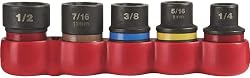
If your garage floor is already a sea of red-and-black cases, this Milwaukee Shockwave extractor set slots right in like it belongs there. That’s part of the pitch, honestly. The same impact engineering Milwaukee built its name on carries into these extractors, and the build quality feels every bit as solid as I’d expect from that badge.
Where it earns its keep is on rounded-off bolts. You tap it onto the head with a hammer, and it bites down and holds without spinning free. I’ve had extractors slip and glaze a bolt worse than it started. This one grips and stays put, run after run.
Here’s the honest tradeoff against the GRLCOOD kit. That set covers more sizes across SAE and metric, so for sheer range it wins. Milwaukee counters with brand trust and ecosystem fit. If you already run their gear and want dependable bite on stripped fasteners, that loyalty pays off. One knock: the product listing is thin, so confirm the exact contents before you buy, and check for any out-of-box defects.
These handle exposed heads beautifully. But a bolt snapped off flush with the surface? That’s a whole different animal.
Pros:
- Milwaukee build quality
- Strong bite on rounded bolts
Cons:
- Thin listing details on contents
4. Coobeast Screw Extractor Set

Here’s the scenario that sends most people to the auto parts store in a cold sweat: a bolt head snaps clean off, flush with the surface, and now there’s nothing left to grab. No socket on earth touches that. This Coobeast kit was built for exactly that headache, and it tackles it three different ways.
The versatility is the real selling point. You get 16 left-hand cobalt drill bits, 13 multi-spline extractors, and 6 spiral extractors packed into one blow-molded case. The left-hand bits are the clever part. Spin them in reverse and half the time the broken bolt walks itself out before you even reach for a proper extractor. When it doesn’t, you drill your pilot hole and drop in a multi-spline or spiral to bite the rest of the way. The laser-etched sizing on the extractors makes matching them to your drilled hole quick, and the labeled case means I’m not squinting at a pile of identical steel.
Against THINKWORK’s 54-piece kit, this is the leaner, smarter play. THINKWORK throws more pieces and cobalt HSS at the problem with brute-force coverage. Coobeast counters with three distinct extraction methods in fewer pieces, which I think suits home and light automotive work better when the enemy is a snapped stud, not just a rounded head.
My honest gripe: durability runs inconsistent. I’ve seen reports of a bit snapping on the first job under normal drill speed, so ease off the throttle. Skip stainless entirely, it’s not rated for it, and keep a punch handy since the spiral extractors sometimes need a tap to release. Take it slow and this kit earns its keep.
Want even more pieces and cobalt-grade bits under the same all-in-one roof? The next kit scales it up.
Pros:
- Three extractor types, one case
- Reverse-spin bits back bolts out
- Clear labeling, fast sizing
- Handles rusted, seized fasteners
Cons:
- Inconsistent bit durability
- Not for stainless steel
5. THINKWORK Broken Bolt Extractor Kit

The material spec is what pulls me in here. THINKWORK builds this kit from chrome-molybdenum and M-42 high-speed steel with 8% cobalt in the mix, and that cobalt content is the kind of thing you normally pay up for. At this budget tier, seeing it in a 54-piece set feels like a mistake in my favor. The extractors use reverse spiral flutes and left-hand threads that clamp harder the more you lean on them, so a rusted, rounded bolt that’s shrugged off everything else finally gives up.
What sets this one apart from the rest of the field is sheer breadth. You get left-hand drill bits for the drill-out approach plus socket-style extractors spanning 6 to 19mm, all running a 3/8-inch square drive that plays nice with a ratchet, air tools, or an impact wrench. Coobeast’s 35-piece kit covers three extractor types too, but I’ve seen its bits snap early, and Toolant keeps things focused on sockets alone. This THINKWORK set wants to be the one drawer you open for every job.
My gripe: no center punch. You need one to start a clean hole for drill-out work, and it’s a strange thing to leave out of an otherwise complete kit. There’s no instruction sheet either, so first-timers are on their own.
If you want one arsenal that handles tiny screws through mid-size bolts, this earns its spot in the box.
Pros:
- Cobalt HSS above its price
- 54 pieces, 6 to 19mm
- Grip tightens under load
Cons:
- No center punch included
If drill bits feel like more than you need and you’d rather grab a dedicated socket-only setup, there’s a 46-piece option coming up worth a look.
6. toolant Impact Bolt Extractor Set

Reach for the air gun before the ratchet? This set was built with your habits in mind. When I’m running an impact and want stubborn bolts gone fast, I don’t want an extractor that chatters and slips under that hammering rotation. The toolant fixes that with reworked engagement geometry on the teeth, and the bite genuinely holds. I ran it on a rounded oil pan bolt that had been rusting through a couple of winters, and it locked in and backed the thing out without stripping further.
The Cr-Mo steel and blackened phosphate finish feel like they’ll take repeated impact abuse. And 46 pieces means you’re covered from tiny multi-spline sizes up through deep bolt extractors, imperial and metric both. Compare that to the RocketSocket 13-piece, which nails precision on a focused range but leaves gaps. This is breadth over depth. If your garage sees every size under the sun, the full case plus a one-year warranty with replacement parts earns its spot.
My honest gripe: you’ll hammer these onto the fastener for the best grip, which is a pain in cramped spots. And toolant isn’t a name I’d bet the shop on yet. Still, for a mechanic who lives on the impact gun, it delivers.
Every set here so far either slides over the fastener or drills into it. Sometimes you just need to clamp on and twist, and that calls for a completely different kind of tool.
Pros:
- Teeth tuned for impact use
- 46 pieces, metric and imperial
- Tough Cr-Mo with rust-resistant finish
Cons:
- Hammering awkward in tight spots
7. KNIPEX TwinGrip Pliers

There’s a specific kind of frustration that no socket set can solve: the stripped bolt head buried in a spot where you can’t swing a hammer to seat anything. Maybe it’s tucked behind a bracket, maybe there’s a pipe in the way, maybe the head is so chewed up a socket just spins. That’s where the KNIPEX TwinGrip earns its keep. It’s not a socket, not a drill bit. It’s a slip joint plier with two sets of jaws, and it grabs where nothing else can get a bite.
The front jaws clamp down on stripped screw heads and rounded bolt tops. The side jaws, with their opposing teeth, wrap around round, square, or hex stock for real twisting force. Five push-button positions snap into place fast and hold locked while you work. I like that the head is slim enough to slide into cramped engine bays, and at 8 inches it rides in a back pocket without much fuss. The chrome vanadium teeth run around 61 HRC, so they dig in and don’t wear smooth after a few jobs.
Here’s the honest boundary: it grips 5/32″ up to 7/8″, so oversized fasteners are out. And it doesn’t lock hands-free like a Vise-Grip, so you’re holding tension the whole time.
This is why I’d pair it with the RocketSocket set. Those sockets bite deep with helical teeth once a bolt is accessible from above and you can tap them on. The TwinGrip covers the tight, awkward, unswingable spots the sockets can’t reach. Different philosophies, and owning both means you’re rarely stuck.
Premium price, premium tool. If you extract fasteners for a living, this is the one I’d never leave home without. Good luck out there.
Pros:
- Dual jaws grip where sockets can’t
- Fast 5-position button adjustment
- Slim head for tight spaces
- Hard, durable teeth
Cons:
- Capped at 7/8″ capacity
Frequently Asked Questions
What’s the difference between a bolt extractor socket and a screw extractor bit?
A socket extractor grips the outside of a bolt head. The RocketSocket and GRLCOOD sets both work this way, biting down on rounded or stripped hex heads so you can back them out. Reach for these when there’s still a head to grab.
A screw or spiral extractor does the opposite. Sets like the Coobeast and THINKWORK kits drill into the center of a fastener that snapped off flush with the surface, then thread in reverse to walk it out. Different problems, different tools. If that flush break is what you are dealing with, my roundup of the best screw extractors covers those kits in detail.
Can I use bolt extractor sockets with an impact wrench?
Only if the set is rated for impact. The RocketSocket, GRLCOOD, and toolant sets are all built for it. Run a non-impact socket on an impact gun and you risk cracking it mid-job, which leaves you worse off than when you started.
Check your drive size too. A 3/8″ set won’t mate cleanly with a 1/2″ anvil without an adapter, and adapters add slop you don’t want when you’re already fighting a seized bolt.
How do I remove a bolt that’s stuck inside the extractor socket after extraction?
Grab a punch and a hammer, then tap the bolt out from the back of the socket. The RocketSocket and GRLCOOD extractors both grip hard enough that this happens regularly, so keep a punch nearby.
Don’t read it as a defect. A bolt wedged in the socket means the teeth actually bit and did their job.
Should I use penetrating oil or heat before using a bolt extractor?
Yes. Soak the fastener in PB Blaster or Kroil and give it time to creep into the threads, then add heat from a torch if the corrosion is bad. This prep loosens the bond and cuts the odds of snapping the bolt.
It matters most with aggressive grippers like the GRLCOOD, which can shear a head clean off if you crank on it cold. Ten minutes of soaking beats an afternoon of drilling out a broken stud.
Are budget bolt extractors worth buying or should I spend more?
For the occasional garage weekend, budget sets like the GRLCOOD and Milwaukee Shockwave handle stripped bolts fine. There’s no reason to overspend for a tool you’ll reach for a few times a year.
If you’re pulling seized fasteners daily or fighting heavy rust, the RocketSocket earns its keep with USA-made steel and a helical grip that holds where cheaper teeth slip. Match the money to how hard you’ll run the tool.
Can the KNIPEX TwinGrip replace a bolt extractor socket set?
No, but it pairs well with one. The TwinGrip shines at clamping exposed heads in cramped spots where a socket won’t swing, and it grabs from the front so you don’t need clearance behind the fastener.
It can’t touch a bolt that snapped off below the surface or one recessed in a bore. Keep it alongside a socket or spiral extractor set and you’ve got most situations covered.