

You’re standing in the garage staring at a tangle of Romex, and the cheap stripper you bought three years ago just nicked another conductor. Again. I’ve been there, usually right after I told myself this would be a quick job.
The best wire stripper is not always the fanciest one on the pegboard. I looked at practical favorites like the Klein 11055 and the Irwin 2078300 because clean cuts, steady jaws, and hand feel matter more than shiny packaging when you are trying to finish before dinner.
Some strippers bite too deep. Some slip. A few make the work feel almost suspiciously easy. Let’s sort out which ones belong in the toolbox and which ones can stay in the bargain bin.
Best Wire Strippers in 2026
| Image | Model | |
|---|---|---|
 | Best Overall Klein Tools 11055Editor's Choice  Check Price | Check Price |
 | Best for Mixed Gauges Irwin 2078300Check Price | Check Price |
 | Best Jobsite Multitool Milwaukee 48-22-3079Check Price | Check Price |
 | Best Budget Value WGGE WG-015Check Price | Check Price |
 | Best Premium Upgrade Knipex 13 72 8Check Price | Check Price |
 | Best for Romex Runs Klein Tools K1412Check Price | Check Price |
- I pick by the wire pile first, because a tool that shines on tidy outlet swaps can slow me down in a mixed harness.
- For a homeowner box, the Klein Tools 11055 is the safe middle ground when I want stripping, cutting, and looping without extra bulk.
- If the job is a grab bag of small wires, the Irwin 2078300 saves me from stopping every few seconds to check markings.
- Do not let extra features sell you if the jaws feel sloppy, since clean alignment is what keeps a quick repair from becoming a redo.
- For repeat work, I would rather buy the tool that fits my most common wire perfectly than chase one tool that claims to cover every odd job.
- None of this matters if the circuit is still live, so the tool I actually pick up first is a auto-ranging multimeter to confirm the wire is dead.
1. Klein Tools 11055
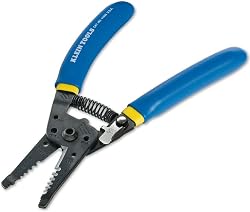
If I had to hand one wire stripper to a homeowner who is replacing outlets, adding a switch, or cleaning up a small panel project, the Klein Tools 11055 would be near the top of my list. It is not flashy. It is the kind of tool that earns trust by doing the same boring job cleanly over and over, which is exactly what I want around residential copper wiring.
The fixed stripping holes cover 10 to 18 AWG solid and 12 to 20 AWG stranded, so it lands right in the sweet spot for common house wiring. On Romex work, that matters. You are usually dealing with solid copper conductors, and the Klein lets me pick the marked hole, squeeze, pull, and move on without chewing up the conductor. The cutting edges also make tidy cuts, which helps when I am trimming pigtails to a consistent length before landing them on devices.
I like the handle shape more than I expected. The curved grip gives my hand a natural angle when I am working inside a cramped box, and the spring opening saves a little effort when I am stripping a pile of conductors. Little stuff, sure. After the twentieth wire, little stuff becomes coffee money for your hands.
The screw cutter is another reason this belongs in an electrician pouch and a DIY drawer. If a device screw needs shortening, this tool handles common size 6 and size 8 machine screws, so I do not have to go hunting for another tool. It also bends and loops wire, which is handy when wrapping solid copper around outlet and switch terminals.
Compared with the Knipex 13 72 8, this Klein feels more like the practical residential pick. The Knipex brings a more premium build and extra cleverness around screw cutting, but it sits at a different cost level and may be more tool than many weekend projects need. The Klein keeps the core jobs simple and reliable.
My main gripe is the lock. Its placement can get in the way if your hand bumps it while cutting or stripping. Also, this is a copper wire tool with a limited gauge range, so I would not grab it for oddball low voltage work or heavier cable. For normal outlets, switches, panels, and Romex runs, though, it is the standard I would measure others against. If fixed slots make you second guess the gauge every time, the next style of stripper takes a very different approach.
- Excellent residential gauge range
- Clean cuts on copper
- Comfortable handle shape
- Built in screw cutter
- Lock can get bumped
- Copper wire only
2. Irwin 2078300

The reason I like the Irwin 2078300 for mixed wire work is simple: I do not have to stop and match every conductor to a hole. On a bench full of 16 AWG stranded leads, 22 AWG accessory wires, and a multi conductor cable with no markings left on the jacket, that self adjusting action saves real time and a little sanity.
It strips 10 to 24 AWG, and the small swivel adjustment matters more than it looks like it would. Fine wire under 20 AWG can get chewed up fast with the wrong bite, so I would take a minute to tune that knob on scrap before touching the good stuff. Once it is set, the adjustable stop is handy for repeat lengths. If I were wiring a small boat panel or making a batch of pigtails, I would set the strip length once and just keep feeding wires through.
Compared with the Klein 11055, this Irwin is faster when the wire sizes keep changing. The Klein style fixed slots are more direct and feel simpler when I know I am stripping the same gauge all afternoon. I trust that kind of tool for precision because there is less going on. The Irwin earns its keep when the job is messy, mixed, and full of stranded wire.
It is not perfect. Solid 12 or 14 AWG with thin insulation can give it trouble, so I would not make it my first pick for every residential rough in task. The crimping spot sits in an awkward place, and the cutter feels more like a backup than my main cutter. Keep insulation crumbs out of the mechanism and give it a little oil now and then.
If this style of all in one tool sounds right, the next Milwaukee option pushes even harder into tool consolidation.
- Fast mixed gauge stripping
- Helpful fine wire adjustment
- Repeatable strip length stop
- Weak on some solid wire
- Awkward crimper placement
3. Milwaukee 48-22-3079

I like this Milwaukee best as the tool I grab when I am not wearing a full pouch. Service call, attic crawl, quick fixture swap, mystery junction box behind a cabinet. That kind of work. It gives me stripping slots for common bare and stranded wire sizes, a cutter, needle nose tips, loop holes, small screw cutting, and conduit edge cleanup in a pocket sized frame.
As a wire stripper, it does the job cleanly enough to earn its spot here. The listed range covers 8, 10, 12, 14, 16, and 18 AWG bare wire, plus 10 through 20 AWG stranded, which hits most light electrical tasks I would expect from a compact field tool. The spring assisted handle helps when I am making repeated strips inside a box, though I would not call it as relaxed for all day stripping as a more dedicated pair.
Compared with the Klein 11055, this Milwaukee feels more like a compact problem solver than a pure stripping tool. The Klein has the long term jobsite reputation angle, while the Milwaukee gives me reaming and needle nose utility in the same hand. Against the Knipex 13 72 8, Milwaukee is easier to justify when space and budget matter, while the Knipex leans heavier and more serious for cutting chores.
My gripe is simple. The gauge marks are tiny, and that gets old fast in dim basements or above ceiling tile. The bolt cutting is limited to #6 and #8, and the conduit cleanup range stops at 1 inch. Fair enough. This is a compact carry tool, not a full electrician’s drawer. If your kit budget is tight, Milwaukee gives a lot before you have to look at the bargain basement.
- Six useful jobsite functions
- Pocket friendly carry size
- Covers common wire gauges
- Tiny gauge markings
4. WGGE WG-015

I like this WGGE most for the homeowner drawer, the place where a tool might strip a thermostat lead on Saturday and a trailer light wire two months later. For that kind of work, it makes a strong case. It covers 10 to 22 AWG, so the common small wiring around a house, car, mower, or low voltage project is in range, and the steel body gives it more confidence than I expect from a budget pick.
The stripping slots are the reason I would buy it, not the crimper. On copper or aluminum in its listed range, it should peel insulation cleanly as long as you match the gauge and avoid twisting while pulling. My tip is simple: close the jaws fully, pull straight, and if the copper looks shiny but scored, move up one size. The cutter and crimp spots are handy, but I would not lean on this for heavy terminals or daily panel work.
Compared with the Klein 11055, spending several times more buys a stronger brand track record and more proven long term toughness. For occasional stripping, though, I do not think the Klein gives every homeowner a dramatic improvement. The WGGE is the sensible cheap date. If you want the last wire tool you plan to buy, the premium shelf still has an argument.
- Excellent budget value
- Covers common home gauges
- Crimper is basic
5. Knipex 13 72 8

I would buy the Knipex 13 72 8 for the person who is tired of owning three almost right tools. As a wire stripper, it covers the common home wiring spread from 10 to 20 AWG in both solid and stranded wire, and on solid copper it has the clean, controlled feel I want before landing conductors in a box. Less chewing, less second guessing.
The big reason this one earns its premium spot is the forged build paired with the shear style cutter. The cutting side is rated for half again as much capacity as typical competition while taking about a quarter less squeeze, and that matters after a run of NM cable, BX, MC, and loose conductors. My hands notice that stuff by the third receptacle. It also cuts 6 32 and 8 32 machine screws from either side, which is more useful than it sounds when a device screw needs shortening and I do not feel like walking back to the bench.
Compared with the Klein 11055, the Knipex is the spendier tool by a wide margin, roughly in the neighborhood of double. The Klein still makes a lot of sense for weekend electrical work because it strips, cuts, loops, bends, and shears common screws for less money. I think the Knipex earns the jump if this tool will live in your pouch, not the junk drawer. The sharpness holds up after 4 to 5 years of heavy use, which is the kind of tool math I can respect.
It is not perfect. The stranded wire slots are not as forgiving on 10 to 12 AWG stranded, where nicking or tearing can show up if your angle is sloppy. It is also heavier than average, so one handed work above your head or inside a cramped cabinet is not its best party trick. Still, for pros and serious hobbyists who want one premium stripper, cutter, looper, screw shearer, and occasional gripper, this is the wide capability pick. Next, I would go the opposite direction with a tool that wins by being more focused.
- Clean 10 to 20 AWG stripping
- Strong shear style cutter
- Cuts common device screws
- Built for long service
- Pricey beside the Klein
- Heavy in tight spaces
6. Klein Tools K1412

If I were roughing in a basement or replacing a string of old receptacles, this is the stripper I would want clipped near the pouch. The Klein K1412 is built around the wire I see most in residential work: 12/2 and 14/2 NM-B. Instead of fussing with a knife around the jacket, I can set the cable in the dedicated slot, squeeze with some control, and peel back the sheath fast.
That is where it separates itself from the Klein 11055. I like the 11055 for general electrical chores because it covers more odds and ends, but the K1412 is quicker when the job is mostly Romex. It does not try to be everything. It strips the outer jacket, handles the common solid conductors inside, cuts copper neatly, and gives me a narrow nose for bending loops onto switches and receptacles.
There is a small learning curve. If I mash down like I am cutting fence wire, I can nick insulation while opening the jacket. A steady squeeze works better. I also would not buy this as my only stripper if I deal with many gauges outside common residential cable. For 12 and 14 gauge house wiring, though, it earns its spot. Simple tool, specific job, fast results. Hard to argue with that on a Saturday.
- Fast on NM-B cable
- Ideal for 12/2 and 14/2
- Good loop forming nose
- Limited gauge range
How to Pick the Right Wire Stripper for Your Projects
Stripping Mechanism Type
Wire strippers come in two main styles: fixed slot and self adjusting. Fixed slot strippers use labeled holes for each wire gauge. You place the wire in the matching slot, squeeze, twist if needed, and pull. They are simple, accurate, and hard to confuse once your eyes learn the markings.
Self adjusting strippers, like the Irwin 2078300, clamp the insulation and pull it off with a jaw mechanism. I like that style for stripping a stack of similar wires at the bench, especially low voltage leads or fixture wires. They save time when the wire sizes keep changing because you are not hunting for the right hole every time.
The catch is control. Fixed slot tools can nick copper if you use the wrong gauge hole. Self adjusting tools can slip on slick insulation, chew soft insulation, or struggle with short leads inside a crowded box. If you work mostly inside device boxes and panels, I would rather have a clean fixed slot stripper than a bulky automatic jaw.
AWG Range Coverage
Match the tool to the wire you touch most. For typical residential work, I want easy coverage for 14 AWG and 12 AWG solid copper. Add 10 AWG if you do water heaters, dryers, small subpanels, or heavier branch circuits. For electronics, thermostats, doorbells, trailers, and low voltage lighting, you may need 18 AWG down to 22 AWG or smaller.
Do not assume one stripper handles everything just because the package has a long list of numbers. Some tools cover solid wire in one range and stranded wire in another. Some skip a size you use every Saturday. That missing slot will annoy you faster than a smoke detector chirp at midnight.
- Common residential branch circuits: 14 AWG and 12 AWG solid copper
- Appliance and heavier household circuits: 10 AWG solid copper
- Fixture leads and cords: often 16 AWG or 18 AWG stranded copper
- Low voltage controls: often 18 AWG to 22 AWG
Before you buy, check the printed AWG markings against the wire sitting in your garage, not the project you imagine doing someday. A perfect stripper for 20 AWG thermostat wire is the wrong tool for 12/2 NM cable.
Multi Function Value
A good multi function stripper can replace a small handful of tools. Cutting jaws are the most useful extra. A clean loop maker helps when landing wire under screw terminals. Screw shearing holes are handy if you install switches and receptacles often and need to trim 6 32 or 8 32 screws without mangling the threads.
The Klein Tools 11055 is the kind of compact multi function layout I like for everyday household wiring. It strips, cuts, loops, and shears screws without turning into a toolbox brick. The Milwaukee 48 22 3079 goes further with a reaming head and needle nose profile, which helps when working with conduit fittings or fishing conductors into tight spots.
Crimpers are useful only if you crimp terminals often and the tool matches the terminals you use. The WGGE WG 015 includes stripping, cutting, and crimping in a budget friendly format, which makes sense for light garage and automotive jobs. Do not pay extra for crimping slots unless you know whether you use insulated terminals, non insulated terminals, or both.
Comfort and Ergonomics
Comfort sounds soft until you strip 50 wires in a panel, then your hand starts voting. I look for handles that fill the palm without forcing my fingers wide open. A spring return matters too. It opens the tool after each cut, which keeps the rhythm moving and saves hand fatigue. Before those fifty wires, though, work out which breaker actually feeds the box — a circuit breaker finder saves the walk back to the panel every time you guess wrong.
Double dipped or cushioned grips help, but shape matters more than padding. Skinny handles can dig into your palm. Oversized handles can feel clumsy inside a crowded box. If you wear gloves, check that the tool still opens and closes without your fingertips fighting the grip.
Weight is a balance. A heavier forged tool can feel steadier and cut better. A lighter stamped tool is easier to carry all day. For weekend work, I care less about belt weight and more about whether the jaws line up cleanly after repeated use.
Durability and Build Material
Forged steel tools usually hold alignment better because the jaws and frame have more meat behind them. Stamped steel tools can still work well, but cheaper ones may flex, dull faster, or develop sloppy pivot play. Once the cutting edges stop meeting cleanly, stripping turns into tearing.
The Knipex 13 72 8 is a good example of why build matters. Its forged construction, screw cutting setup, and shear style cutting edges are built for repeated use, not just occasional outlet swaps. That kind of tool costs more than a basic stamped stripper, but it earns its keep if you wire often.
Look closely at the cutting edges before the first use: they should meet evenly with no daylight between them. Also check the pivot. It should move smoothly, with no wobble side to side. A wire stripper is a precision tool hiding in plain sight.
Solid vs. Stranded Wire Compatibility
Solid wire and stranded wire do not strip the same. Solid copper is one piece, so a properly sized slot can score the insulation and pull it clean. Stranded wire is a bundle of smaller conductors. Use the wrong slot and you can shave off strands without noticing until the connection fails or the wire breaks during installation. This is why the Klein K1412 and other single purpose strippers can save grief when your wire type stays consistent.
Many strippers print separate markings for solid and stranded wire. Pay attention to those labels. A hole marked for 12 AWG solid may not be right for 12 AWG stranded because the insulation thickness and conductor bundle behave differently.
For stranded wire, use the stranded marking on the tool and test on scrap before stripping your final lead. If you see bright copper hairs in the insulation slug, the slot is too small or the blade is biting too deep. I would rather waste one inch of scrap than weaken a connection buried behind a device.
Quick Picks: The Right Wire Stripper for Your Situation
Weekend warriors tackling outlet swaps and ceiling fan installs
Buy the Klein Tools 11055. It handles the common residential wire sizes, makes clean loops for terminals, and is the one I would toss in a homeowner toolbox without overthinking it.
Dealing with a rats nest of mixed gauge wires in an old boat or vintage car
Go with the Irwin 2078300. The self adjusting jaws spare you from hunting for the right slot every time you grab a new wire, which is a small mercy when the wiring already looks like spaghetti.
Your toolbox budget is tight
Pick the WGGE WG 015. It strips, cuts, and crimps well enough for occasional repairs, and it is the sensible choice when you just need the job done without getting fancy.
One tool to rule them all on a cramped job site
Grab the Milwaukee 48 22 3079. It slips into a pocket and covers a lot of light electrical and conduit work, so you are not crawling out of a tight spot every five minutes for another tool.
You buy tools once and expect them to outlast your house
Choose the Knipex 13 72 8. The forged build and shear style cutting make it the premium pick for folks who use their tools hard and hate replacing them.
Full day Romex runs during a kitchen or basement remodel
Get the Klein K1412. Its dedicated NM cable slots make repeated stripping fast and consistent, and those saved seconds feel mighty nice after your hundredth cable.